What Your Credit Card's Travel Insurance Actually Covers (and the Fine Print That Voids It)
Fact-checked July 2, 2026 · 9 sourcesHow we verify
Most travel credit cards quietly bundle a stack of insurance you already paid for in the annual fee — and most cardholders only discover the exact terms while standing at an airport help desk at 1 a.m. This is the research guide that tells you, before you travel, which protections are genuinely strong, where the real gaps are, and the small activation rules that turn a valid claim into a denied one.
This is a sourced research post. The structure of these benefits is stable, but every dollar cap, hour threshold, and "primary vs. secondary" label is specific to your card and changes over time. Treat each figure here as approx. and confirm the exact wording in your card's Guide to Benefits before you book. See the Sources at the end.
The four coverages bundled with most travel cards
Strip away the marketing and a travel card's protection comes down to four buckets. Two are reliably useful, one depends entirely on which card you carry, and one is a gap most people don't notice until it matters.
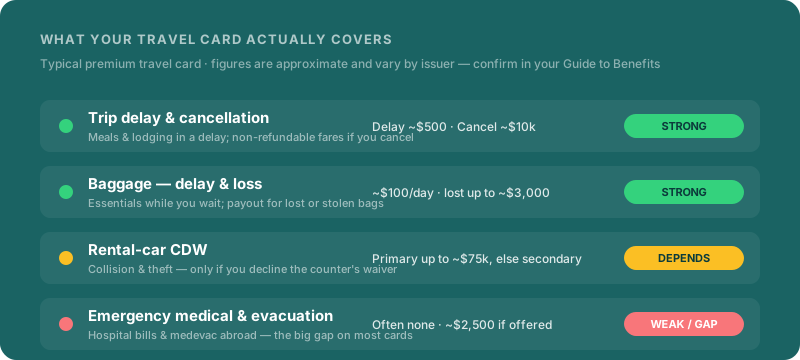
| Coverage | What it pays for | Typical cap (approx.) | How useful |
|---|---|---|---|
| Trip delay | Meals, hotel, essentials during a long delay | Up to ~$500 per traveler | Strong |
| Trip cancellation / interruption | Pre-paid, non-refundable fares & hotels | Up to ~$10,000 per person, ~$20,000 per trip | Strong |
| Baggage delay | Essentials while bags are late | ~$100/day for up to 5 days | Strong |
| Lost / stolen luggage | Repair or replacement of bags | Up to ~$3,000 per traveler | Strong |
| Rental-car CDW | Collision & theft on a rental | Primary up to ~$75,000 on premium cards, else secondary | Depends on card |
| Emergency medical | Hospital & evacuation abroad | Often none; ~$2,500 if offered | Weak — the real gap |
Caps above reflect commonly cited premium-card terms (e.g., the Chase Sapphire line); your card may differ substantially. Confirm before booking.
Trip delay and cancellation — the workhorse benefit
This is the protection you'll actually use. If a covered delay strands you, the card reimburses unreimbursed out-of-pocket costs — meals, a hotel room, a toothbrush — up to roughly $500 per traveler.
The catch is the hour threshold, and it's where cards diverge:
- A mid-tier card (e.g., Chase Sapphire Preferred) typically requires the delay to exceed ~12 hours or to require an overnight stay.
- A premium card (e.g., Chase Sapphire Reserve, Capital One Venture X) often triggers at ~6 hours.
Six hours versus twelve is the difference between a covered dinner-and-hotel night and an uncovered one, so know your number before you're rebooking at the gate.
Trip cancellation/interruption is separate and larger: it reimburses pre-paid, non-refundable costs — fares, tours, hotels — up to roughly $10,000 per person and $20,000 per trip when you cancel or cut a trip short for a covered reason (your own covered illness or injury, a death in the family, severe weather). Note the phrase "covered reason." Changing your mind is not covered — that's a separate, paid product called Cancel For Any Reason (CFAR), which no credit card includes. If your exposure is a five-figure non-refundable trip, weigh a standalone policy; we compare the trade-offs in Travel insurance vs. booking flexibility.
Baggage — delay versus loss are two different claims
People lump "baggage coverage" together, but cards treat two situations distinctly:
- Baggage delay — your bag is late (typically more than ~6 hours). The card reimburses essentials you buy while you wait, often ~$100 per day for up to 5 days.
- Lost, damaged, or stolen luggage — the bag and contents are gone. The card reimburses repair or replacement, commonly up to ~$3,000 per traveler (New York residents often see a different structure, e.g., ~$2,000 per bag).
Two practical notes. First, valuables — electronics, jewelry, cash, documents — are frequently excluded or sub-limited, so don't count on the headline number for a stolen laptop. Second, this coverage usually sits on top of what the airline owes you; you typically claim the airline first, then the card covers the gap. If checked-bag fees are eating your budget in the first place, see the baggage-fee trap.
Rental-car CDW — the "primary vs. secondary" that saves your premium
A rental-car collision-damage benefit (CDW) is one of the most valuable card perks if you understand two words: primary and secondary.
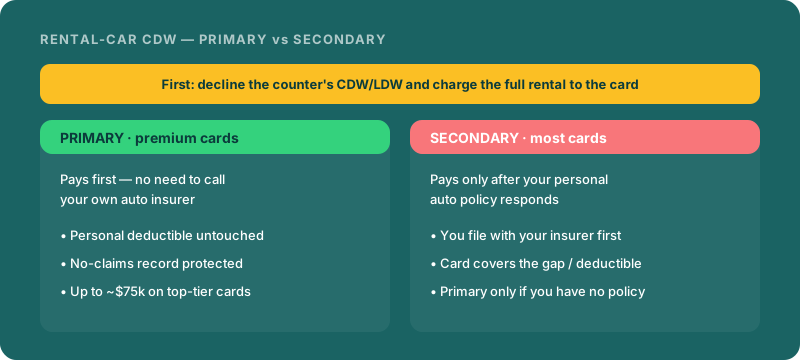
- Primary coverage (found on premium travel cards) pays first. You never involve your personal auto insurer, so your deductible stays untouched and your no-claims record is protected. Premium cards commonly cover theft and collision up to roughly $75,000 (≈$60,000 on some mid-tier cards, often with an MSRP ceiling on eligible vehicles).
- Secondary coverage (the default on most cards, including the Amex Platinum) pays only after your own auto policy responds. You file with your insurer first; the card reimburses the gap, like your deductible. It effectively becomes primary only if you have no auto policy at all.
Two conditions activate either version, and skipping either voids the claim:
- Charge the entire rental to the card.
- Decline the rental counter's CDW/LDW. (Counter staff are paid to upsell it; that's exactly what the card replaces.)
Also check geography and vehicle type: many cards exclude certain countries (Italy, Ireland, Australia, and New Zealand appear on common exclusion lists) and won't cover trucks, exotics, antiques, or vans. Confirm both before you decline the counter waiver.
The medical gap — what cards barely cover
Here's the misconception that costs people the most: a travel card is not health insurance. Most premium travel cards include little or no emergency-medical coverage, and where they do, the cap is small — the Chase Sapphire Reserve, for example, has been cited at around a $2,500 emergency-medical limit, and that benefit is typically secondary to your own health plan.
For context, a standalone travel-medical policy commonly offers $100,000+ in emergency medical and $250,000–$500,000 in medical evacuation — the latter being the genuinely catastrophic number, since an air ambulance home can run into six figures. Cards also routinely exclude pre-existing conditions (some look back ~60 days from booking) and high-risk activities like scuba diving, skydiving, and even skiing.
If you're traveling abroad, or anywhere your domestic health insurance won't follow you, your card is not the plan. Buy a dedicated travel-medical policy. The card's trip-delay and rental benefits are a nice supplement on top — not a substitute.
The activation rules that quietly void everything
Every benefit above shares one master switch, and it's the single most common reason claims are denied.
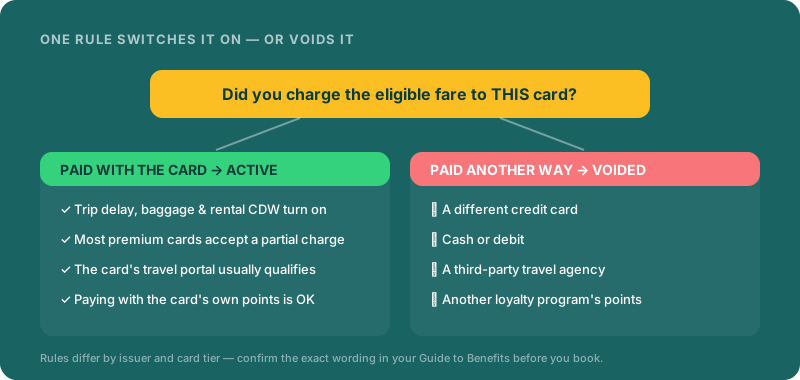
You must pay for the qualifying travel with that specific card. Pay the airfare on a different card, in cash, through a third-party agency, or with another program's points, and the protection simply doesn't apply. A few nuances worth knowing:
- Partial payment often counts. Many premium cards activate coverage even if you only put part of the fare on the card (e.g., taxes and fees on an award ticket). Confirm yours; it's a common way to keep coverage on points bookings.
- The card's own travel portal and points usually qualify. Booking through its travel site or redeeming its points typically preserves coverage. It's another program's currency that breaks it.
- Trip-length caps apply. Card policies commonly cap a single trip at around 60 days (some as low as 15–30 days). Longer trips fall outside coverage and need a standalone policy.
- Document everything. Claims require receipts, the carrier's written delay/cancellation reason, and a police or property-irregularity report for theft. No paper trail, no payout.
Before any trip you're protecting, it's worth a five-minute check: Which card did I pay with? Does the timing threshold cover my realistic worst case? Is the rental benefit primary or secondary? Once you know your real coverage, you can build the trip around it — Leavewise lines up your holidays and weekends into the breaks you'll actually want to insure.
Card coverage vs. a standalone policy — a quick honest comparison
| Feature | Travel credit card | Standalone travel insurance |
|---|---|---|
| Cost | Bundled in the annual fee | Separate premium (~4–10% of trip cost) |
| Trip delay / baggage | Solid, automatic | Solid, often higher caps |
| Rental-car CDW | Often included (primary on premium) | Usually an add-on |
| Emergency medical | Minimal or none (~$2,500 if any) | Core strength ($100k+) |
| Medical evacuation | Limited | $250k–$500k typical |
| Cancel For Any Reason | Never | Available as an upgrade |
| Pre-existing conditions | Usually excluded | Waivable if bought early |
| Activation | Must pay with the card | Just buy the policy |
The honest takeaway: for short domestic trips, a good travel card's built-in protection is often enough. For international travel, long trips, expensive non-refundable bookings, or anyone with health risk, layer a standalone policy on top and let the card handle delays and rental cars.
FAQ
Do I have to do anything to activate my credit card's travel insurance?
You don't "enroll," but you do have to pay for the qualifying travel with that card — and for rental cars, decline the counter's collision-damage waiver. Paying with a different card, cash, or another program's points generally voids the benefit. Many premium cards accept even a partial charge (handy for award tickets), but confirm yours in the Guide to Benefits.
Does credit card travel insurance cover emergency medical costs abroad?
Usually not in any meaningful way. Most premium travel cards offer little or no emergency-medical coverage; where they do, caps are small (cited around ~$2,500 on some cards) and typically secondary to your own health plan. For international trips, buy a dedicated travel-medical policy — especially for the medical-evacuation coverage, which can run into six figures.
What's the difference between primary and secondary rental-car coverage?
Primary pays first, so you never file with your personal auto insurer and your premium/no-claims record stays clean — it's a premium-card perk. Secondary pays only after your own auto policy responds, covering gaps like your deductible, and is the default on most cards. Either way, charge the full rental to the card and decline the counter waiver.
Is my card's travel insurance enough, or do I need a separate policy?
For short domestic trips, a strong travel card is often enough on its own. For international travel, trips longer than ~60 days, large non-refundable bookings, or anyone with a pre-existing condition or planning high-risk activities, add a standalone policy — the card simply doesn't carry the medical, evacuation, or Cancel For Any Reason coverage you'd need.
Sources
- Chase — A Guide to Chase Sapphire Travel Insurance — issuer detail on delay thresholds, cancellation, baggage, and primary rental coverage
- Chase — Trip Delay Reimbursement: what to know — delay hour thresholds and payment requirement
- NerdWallet — 11 Credit Cards That Provide Travel Insurance — cross-card comparison of caps and primary vs. secondary
- Capital One — Credit Card Travel Insurance: What to Know — coverage categories, exclusions, "review your Guide to Benefits"
- Squaremouth — Credit Card Travel Insurance: What Does It Cover & Is It Enough? — the medical/evacuation gap, CFAR, pre-existing exclusions, trip-length caps
- American Express — How Does Credit Card Travel Insurance Work? — issuer overview of benefit types and activation
Dollar caps, hour thresholds, primary/secondary status, and exclusions change and are specific to each card. Verify the current terms in your own Guide to Benefits before you book or travel.
Next Step
Match this trip idea to your PTO
See which holiday windows make this trip easiest to book, then set reminders before prices move.
Plan this trip windowGet booking-timing and PTO planning emails
Useful tools
Related Articles
New Mexico Travel Guide: Chile, Dunes, and Big Skies
New Mexico rewards drivers with white gypsum dunes, mile-high adobe cities, and green-chile everything, but the distances, altitude, and afternoon storms catch most first-timers off guard.
New York Travel Guide: Beyond the City, Into the State
New York is two trips in one: a dense five-borough metropolis and a huge upstate wilderness of gorges, six-million-acre forests, and lake-effect snow belts that most visitors never reach.
Iceland in November: The Off-Peak Window Before the Christmas-Market Surge
November is the last quiet window before Iceland's Christmas-market prices kick in. Here is exactly how it pencils out -- flights, hotels, Blue Lagoon, Ring Road access -- and how US holidays bridge into it.