Kyoto in 3 Days: Itinerary, Where to Stay, and Budget
Fact-checked July 2, 2026 · 6 sourcesHow we verify
Kyoto rewards a tight plan more than almost any city in Japan. The headline sights sit in three loose clusters, and if you visit them in the wrong order you will spend half your trip on buses. This is a research guide that locks in the practical decisions for a short stay: which neighborhood to sleep in, what to eat where, how to move between temples, and what it actually costs per person. Three days (two nights) is enough to see the icons without rushing — and it slots neatly into a long weekend.
This is a sourced research post. The geography, neighborhood character, and food map below change slowly. Anything that moves — admission fees, opening hours, pass prices, hotel rates, and exchange rates — is marked "approx." Re-confirm those against the official sites in the Sources before you book or travel.
First, why 3 days fits a long weekend
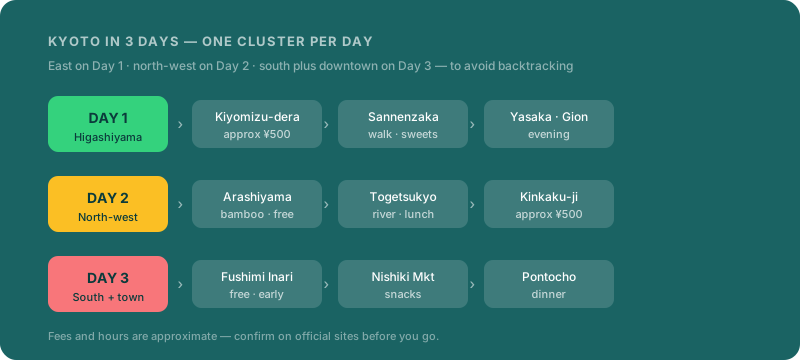
Kyoto's three sight clusters — eastern Higashiyama, the Arashiyama/north-west, and southern Fushimi — map cleanly onto three days. That makes Kyoto an ideal target when you bridge a public holiday into a Friday or Monday off and want a real city, not just a beach.
How many leave days you actually need to reach a clean two-night window depends on where the public holidays fall in your country. Drop your dates into the leave optimizer to see the cheapest bridge to a 3- or 4-day block — and if you are eyeing autumn color, the Japan koyo timing guide shows when Kyoto's maples usually peak.
- 2 nights / 3 days — the plan below. One cluster per day, one base, no hotel-hopping.
- 3 nights / 4 days — add a slower morning, a tea house, or a Nara day trip (about 45 min by train).
- Half-day flex — if you arrive midday, start with downtown Nishiki Market and Pontocho rather than a far cluster.
Where to stay — pick the neighborhood first
In Kyoto the smarter question is not "which hotel" but "which district," because your base decides how much of each day you lose to transit. Four areas cover almost every traveler.
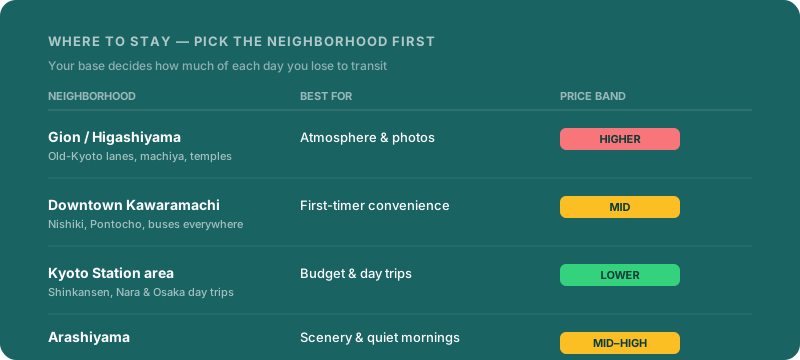
- Gion / Higashiyama (most atmospheric) — Preserved lanes, machiya townhouses, and temples within walking distance. The classic "old Kyoto" base, and the most photogenic. Expect the highest room rates and limited late-night dining.
- Downtown Kawaramachi / Shijo (most convenient) — The practical first-timer pick. Nishiki Market, Pontocho, department-store basements, and buses in every direction are on your doorstep. Central, lively, mid-priced.
- Kyoto Station area (best for budget + day trips) — Modern, dense with hotels at every price, and the launch pad for Nara, Osaka, and the shinkansen. Less atmospheric, very practical.
- Arashiyama (scenic and calm) — Wake up to the bamboo grove and river before the crowds arrive, but you trade roughly 20–60 minutes each way to reach the eastern sights.
Don't move hotels mid-trip for a two-night stay. Pick one base — Kawaramachi or Kyoto Station are the safest all-rounders — and treat each cluster as a day trip from it.
The 3-day itinerary, day by day
The order below minimizes backtracking: east on Day 1, north-west on Day 2, south plus downtown on Day 3. Hours and fees are approx — confirm before you go (see Sources).
Day 1 — Higashiyama (the eastern temple walk)
Start early at Kiyomizu-dera (approx ¥500, opens around 6:00 per japan-guide) before the lanes fill. Walk down the Sannenzaka and Ninenzaka slopes for sweets and crafts, continue through Maruyama Park and Yasaka Shrine, and finish in Gion in the late afternoon when the lantern-lit Hanami-koji feels most alive. This is a walking day — comfortable shoes matter more than a bus pass.
Day 2 — Arashiyama + Kinkaku-ji (the north-west)
Get to the Arashiyama Bamboo Grove early (free, always open) while the path is quiet, then see the Togetsukyo Bridge and a riverside temple garden. After lunch, cross town to the Golden Pavilion (Kinkaku-ji) — approx ¥500, open about 9:00–17:00 per japan-guide. The Arashiyama–Kinkaku-ji hop is the longest transit of the trip, so this is the day a transit pass earns its keep.
Day 3 — Fushimi Inari + downtown (the south)
Begin at Fushimi Inari Taisha and its thousands of vermilion torii — free, always open, a 5-minute / approx ¥150 JR ride to Inari Station from Kyoto Station (japan-guide). Go at opening to beat the heat and crowds; you don't have to climb the whole mountain. Spend the afternoon back downtown at Nishiki Market for snacks, then Pontocho alley for an early dinner by the Kamogawa River.
What to eat — a Kyoto food map
Kyoto's cuisine leans refined and seasonal rather than the loud street food of Osaka. Remember it by district and dish, not by a single must-visit shop (those change). Prices are typical ranges, not quotes.
| Dish | What it is | Where it clusters | Approx price (per person) |
|---|---|---|---|
| Kaiseki (kyo-kaiseki) | Multi-course seasonal tasting menu | Gion, Pontocho, ryotei citywide | Dinner approx ¥6,000–¥30,000; lunch sets approx ¥3,000–¥8,000 |
| Yudofu | Simmered tofu hot pot | Nanzen-ji and Arashiyama temple areas | Approx ¥1,500–¥2,000 |
| Obanzai | Kyoto home-style small plates | Downtown / Kawaramachi izakaya | Approx ¥2,000–¥3,000 |
| Nishiki Market snacks | Pickles, yuba, skewers, sweets | Nishiki Market arcade | Approx ¥300–¥800 per item |
| Yatsuhashi & Kyo-wagashi | Cinnamon sweets, seasonal confections | Higashiyama slopes, station shops | Approx ¥500–¥1,500 |
Tofu cuisine, kyo-kaiseki, pickles (kyo-tsukemono), and yatsuhashi sweets are the dishes JNTO singles out as distinctly Kyoto (japan.travel). For a kaiseki dinner, book ahead; for the same kitchens at a fraction of the price, target the lunch set.
Getting around — passes and fares
Kyoto runs on buses and two subway lines, supplemented by the JR and private railways that reach Fushimi, Arashiyama, and beyond. For most of this itinerary an IC card (tap-and-go) plus the occasional day pass is the simplest combination.
| Option | Approx price (adult) | Best for |
|---|---|---|
| Subway & Bus 1-Day Pass | approx ¥1,100 (child ¥550) | A cross-town day like Arashiyama → Kinkaku-ji |
| Subway-only 1-Day Pass | approx ¥800 | Staying on the two subway lines |
| Randen 1-Day Ticket | approx ¥700 | Exploring the Arashiyama tram line |
| IC card (ICOCA/Suica, pay-as-you-go) | per ride | Light, mixed travel days |
Prices above are from the Kyoto City Transportation Bureau and kyoto.travel (pass details, getting around). Pass coverage excludes some outlying routes, and fares are revised periodically — confirm before buying. If you are also doing intercity trips, weigh whether a rail pass pays off in the Japan Rail Pass after the price hike breakdown.
What 3 days costs — a per-person budget
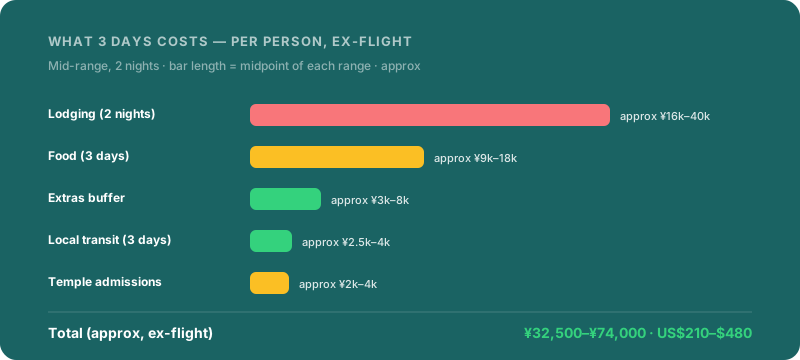
Below is a per-person, mid-range, 2-night estimate covering on-the-ground costs in Kyoto. It excludes international airfare (which varies enormously by origin) so global travelers can add their own flight. Figures are approx and assume roughly US$1 ≈ ¥155–¥165 in mid-2026 (the yen has weakened past ¥160) — the rate moves constantly, so re-check it before you budget.
| Item | Approx per person | Notes |
|---|---|---|
| Lodging (2 nights) | ¥16,000 – ¥40,000 | Budget station hotel up to mid-range Gion machiya |
| Food (3 days) | ¥9,000 – ¥18,000 | Market snacks + one nicer kaiseki lunch |
| Local transit (3 days) | ¥2,500 – ¥4,000 | IC card + a day pass on the cross-town day |
| Temple / attraction admissions | ¥2,000 – ¥4,000 | Most temples approx ¥500 each; Fushimi Inari free |
| Extras buffer (sweets, tea, a souvenir) | ¥3,000 – ¥8,000 | Optional |
| Total (approx, ex-flight) | ¥32,500 – ¥74,000 | ≈ US$200 – US$480 at the assumed rate |
A weak yen makes Kyoto noticeably cheaper for foreign visitors, but exchange rates and hotel rates both move. Recalculate with the live rate just before you book, and lock lodging early if you travel in cherry-blossom (early April) or autumn-foliage (mid-to-late November) peak weeks.
Before you go
Two quick planning notes that save money and stress:
- Time the trip to a bridge day. Kyoto is busiest and priciest in the cherry-blossom and koyo peaks. If you have flexibility, build the long weekend around a public holiday — see the Japan public holidays 2027 bridge guide — and check your own country's bridges in the leave optimizer.
- Decide on rail before you arrive. If Kyoto is part of a multi-city Japan trip, the rail-pass math changes everything; the rail pass guide walks through when it still pays.
FAQ
Is 3 days enough for Kyoto?
For the icons — Higashiyama temples, Arashiyama, Kinkaku-ji, and Fushimi Inari — yes, three days (two nights) covers them comfortably if you take one cluster per day. A fourth day lets you slow down or add a Nara day trip, but it isn't essential for a first visit.
Where should a first-timer stay in Kyoto?
Downtown Kawaramachi for convenience or the Kyoto Station area for budget and easy day trips are the safest all-rounders. Choose Gion / Higashiyama if atmosphere matters most and you don't mind higher rates. Pick one base and don't switch hotels for a two-night stay.
Do I need to pre-book Kyoto's temples?
Most headline sights — Fushimi Inari, Kinkaku-ji, Kiyomizu-dera, the Arashiyama bamboo grove, and Nishiki Market — accept walk-ups and don't require advance tickets. Rules can change, and some seasonal night illuminations have separate timed entry, so confirm on the official site before you go. Kaiseki dinners, by contrast, usually need a reservation.
How much does a Kyoto trip cost per person?
For on-the-ground costs over three days (two nights), budget roughly ¥32,500–¥74,000 per person (approx US$200–US$480) at a mid-range level, excluding international flights. Lodging is the biggest swing factor; food and transit are relatively modest. Re-check the exchange rate and hotel rates close to booking.
Sources
- Kyoto City Official Travel Guide — Getting Around — official Kyoto tourism association: transit options and passes
- Kyoto City Transportation Bureau — Subway & Bus 1-Day Pass — official pass price and coverage
- JNTO — Kyoto Cuisine — Japan National Tourism Organization: signature Kyoto dishes
- japan-guide — Fushimi Inari Taisha — hours, free admission, access from Kyoto Station
- japan-guide — Kinkaku-ji (Golden Pavilion) — hours and admission
- japan-guide — Kiyomizu-dera — hours and admission
- japan-guide — Kyoto Food Guide — kaiseki, yudofu, obanzai price context
Admission fees, opening hours, pass prices, hotel rates, and exchange rates change frequently. Confirm the latest figures on the official sites above before booking or traveling.
Next Step
Match this trip idea to your PTO
See which holiday windows make this trip easiest to book, then set reminders before prices move.
Plan this trip windowGet booking-timing and PTO planning emails
Related topics
Useful tools
Related Articles
New Mexico Travel Guide: Chile, Dunes, and Big Skies
New Mexico rewards drivers with white gypsum dunes, mile-high adobe cities, and green-chile everything, but the distances, altitude, and afternoon storms catch most first-timers off guard.
New York Travel Guide: Beyond the City, Into the State
New York is two trips in one: a dense five-borough metropolis and a huge upstate wilderness of gorges, six-million-acre forests, and lake-effect snow belts that most visitors never reach.
Iceland in November: The Off-Peak Window Before the Christmas-Market Surge
November is the last quiet window before Iceland's Christmas-market prices kick in. Here is exactly how it pencils out -- flights, hotels, Blue Lagoon, Ring Road access -- and how US holidays bridge into it.