Tokyo Neighborhood Guide: Where to Stay, Eat, and Day-Trip
Fact-checked July 2, 2026 · 6 sourcesHow we verify
Tokyo is not one city you "do" in a list — it is a ring of distinct districts, each with its own personality, food, and transit profile. The single biggest decision a first-time visitor makes is not which sights but which neighborhood you sleep in, because that choice quietly shapes your mornings, your dinners, and how far you walk every day. This research guide breaks Tokyo into stay districts by traveler type, pairs each with an area food map, lays out day trips by direction, and ends with a sample budget for first-time global visitors.
This is a Research post written with sources cited at the bottom. It leans on slow-changing information — districts, landmarks, food areas, transit structure — and flags fast-changing details (prices, hours, entry rules, pass costs) as approx. Always reconfirm with the official sites in Sources before you book or travel.
First, how Tokyo fits together
Tokyo's official tourism body, GO TOKYO, organizes the city into five clusters arranged in a circle around the Imperial Palace — Central, Northern, Eastern, Western, and Southern Tokyo. For a visitor, the simplest mental model is the JR Yamanote Line, a loop train that strings together most of the districts you'll stay in and pass through.
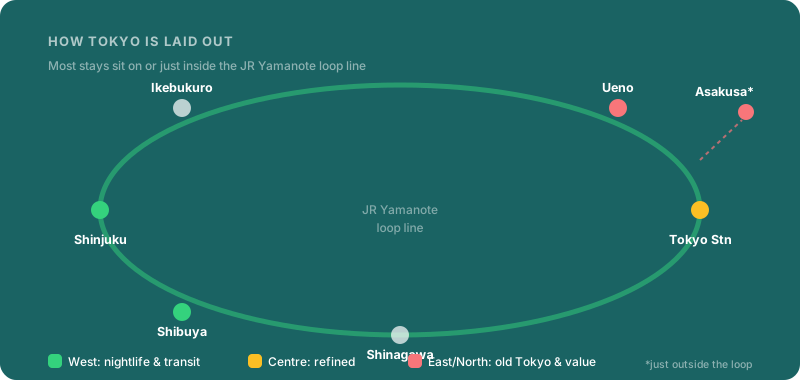
- West side (Shinjuku, Shibuya, Harajuku): the loud, bright, late-night Tokyo — skyscrapers, neon, shopping, and the densest transit.
- Centre (Tokyo Station, Ginza, Marunouchi): refined and orderly — luxury retail, the Imperial Palace, the shinkansen, and quieter evenings.
- East / North (Asakusa, Ueno, Ikebukuro): older, "downtown" (shitamachi) Tokyo — temples, traditional shops, and the best value beds.
The practical takeaway: don't move hotels every two nights. Pick one well-connected base and treat the Yamanote loop (plus the subway) as your hallway.
Where to stay — pick your district by traveler type
There is no single "best" area; there's the best area for you. Below is how the major districts map to traveler types, with an approximate nightly price band (these move a lot by season — confirm before booking).
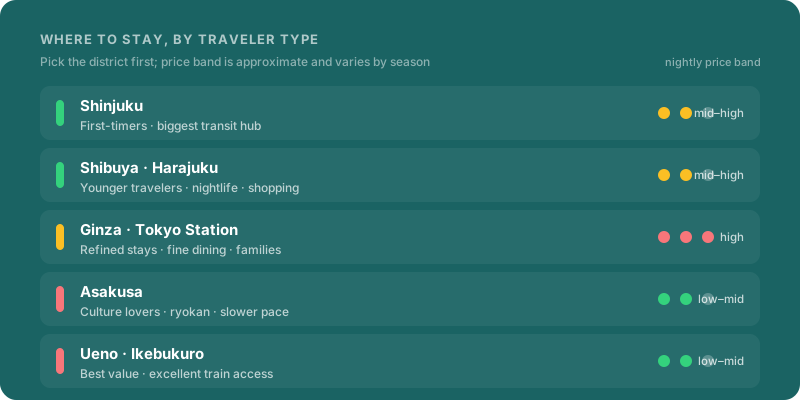
| District | Best for | Why | Price band (approx) |
|---|---|---|---|
| Shinjuku | First-timers, transit-heavy trips | Biggest station in the city; everything connects here | Mid–high |
| Shibuya · Harajuku | Younger travelers, nightlife, shopping | Energy, fashion, the famous crossing; walkable to Omotesando | Mid–high |
| Ginza · Tokyo Station | Refined stays, families, fine dining | Calm, upscale, steps from the shinkansen and the Palace | High |
| Asakusa | Culture lovers, ryokan stays, budget | Sensoji temple, traditional streets, ryokan-style rooms | Low–mid |
| Ueno · Ikebukuro | Best value, transit access | Solid business hotels at competitive rates; great connections | Low–mid |
Shinjuku — the safe first-timer base
If it's your first trip and you want one word for "where do I stay," it's Shinjuku. It is the busiest transit hub in Tokyo, with fast links across the city and out to the airports, plus endless dining and nightlife on your doorstep. The trade-off is that it's busy and bright — light sleepers should book a room away from the station-front.
Shibuya & Harajuku — youth, style, and nights out
Shibuya suits travelers who want to be in the buzz: the scramble crossing, late dining, and an easy walk to Harajuku and Omotesando for shopping. It's a strong all-rounder base, though prices skew similar to Shinjuku.
Ginza & Tokyo Station — calm, refined, well-connected
Ginza is Tokyo's upscale core — flagship stores, galleries, and serious restaurants — and it sits beside Tokyo Station, the shinkansen gateway. Quieter at night and very tidy, it's a good fit for families and for travelers who plan to take day trips by bullet train. Expect the highest room rates of this list.
Asakusa & old-Tokyo — culture and ryokan on a budget
Asakusa centers on Sensoji, Tokyo's oldest temple, and keeps a slower, traditional feel with a wide range of ryokan-style and budget rooms. It's a little farther from the western nightlife districts, but subway access is good and the value is real. Nearby Ueno and Ikebukuro are reliable value picks with excellent train access.
Many guides single out Asakusa, Ueno, and Ikebukuro for high-quality business hotels at more competitive rates — a useful steer if you're keeping the budget tight.
What to eat — a Tokyo food map by area
Tokyo holds one of the largest clusters of MICHELIN-listed restaurants in the world, but you don't need a starred table to eat brilliantly. The easy way to remember Tokyo food is by area — learn the street, not the single shop.
| Dish / experience | Where | One line |
|---|---|---|
| Morning sushi & seafood | Tsukiji Outer Market, Ginza | Fresh sushi, grilled seafood, tamagoyaki; busiest early morning |
| Ramen | Shinjuku, Shibuya | The strip near Shinjuku's west exit is a famous ramen hunting ground |
| Yakitori & izakaya | Omoide Yokocho (Shinjuku), Yurakucho | Tiny, smoky alley bars — the quintessential Tokyo night-eat |
| Monjayaki | Tsukishima | "Monja Street" lines up dozens of specialty griddle shops |
| Tempura, soba, sweets | Asakusa & old-Tokyo | Long-running shops around Sensoji |
| Fine dining / MICHELIN | Ginza, Roppongi | Where the bulk of Tokyo's high-end rooms cluster |
Opening hours and waits shift constantly, and some Tsukiji vendors close mid-afternoon or on market holidays — check the map app and the vendor's hours the morning you go.
What to do — day trips by direction
Tokyo is a superb base because the best of the Kanto region radiates out within roughly an hour or two. JNTO lists Kanagawa, Chiba, Saitama, Gunma, and Tochigi as the neighboring prefectures — which in plain terms means Yokohama, the coast, the mountains, and the shrines are all day-trip range.
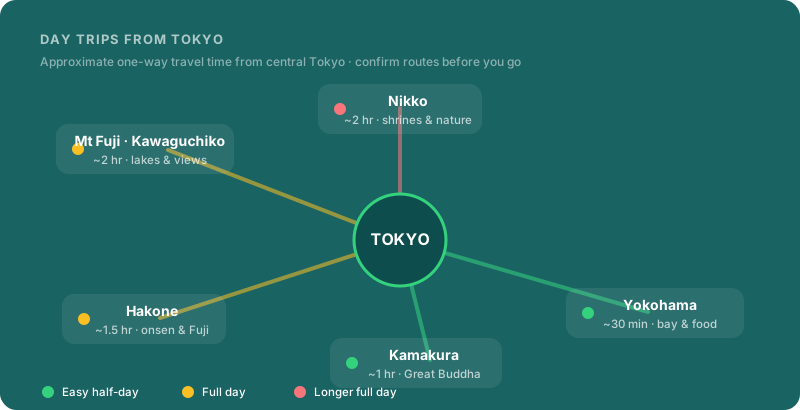
| Day trip | Approx one-way | Good for |
|---|---|---|
| Yokohama | ~30 min | Bayfront, Chinatown, an easy half-day |
| Kamakura | ~1 hr | The Great Buddha, coastal temples, the quickest classic day trip |
| Hakone | ~1.5 hr | Hot springs, Lake Ashi, Fuji views on clear days |
| Mt Fuji · Kawaguchiko | ~2 hr | The Fuji Five Lakes and the iconic mountain views |
| Nikko | ~2 hr | Ornate Tosho-gu shrine and Nikko National Park |
Travel times above are approximate and depend on the line and service you take — confirm the route the day before. For the clearest Fuji views, the drier, colder months tend to win; if you're timing a trip around foliage instead, see Japan's autumn (koyo) windows. A general tip: aim to reach the headline sight by about 9:00–9:30 on a weekday to get a quiet window before tour groups arrive.
If you plan to lean on the bullet train for several day trips, weigh whether a rail pass pays off — we broke down the math in is the Japan Rail Pass worth it after the price hike.
Getting around — IC card vs. the subway ticket
Two systems cover almost everything a visitor needs:
- Suica / PASMO (IC cards): rechargeable tap-to-ride cards that work across trains, subways, and buses in the Tokyo area and beyond, plus convenience-store purchases. Short-term visitors can use a Welcome Suica (no deposit; valid ~28 days). This is the flexible default for most trips.
- Tokyo Subway Ticket: an unlimited-ride pass for all Tokyo Metro and Toei Subway lines, sold in 24-, 48-, and 72-hour versions for short-term visitors. As of 2026 it's priced at approx ¥1,000 / ¥1,500 / ¥2,000 — confirm current pricing before you buy. It pays off on dense, subway-heavy sightseeing days.
Many travelers carry both: an IC card for JR lines, airport runs, and day trips, plus a Subway Ticket for one or two intensive city days. Prices and eligibility change — reconfirm on the official Tokyo Metro and GO TOKYO pages in Sources.
A sample 5-day budget for first-time visitors
Below is an approximate, mid-range, per-person estimate for five days in Tokyo, excluding international flights (those vary enormously by where you fly from). Treat it as a planning sketch, not a quote — it swings with the exchange rate, your district, and how you eat.
| Item | Approx (per person) | Notes |
|---|---|---|
| Hotel (4 nights, mid-range) | $400 – $650 | ~$100–$160/night; cheaper in Asakusa/Ueno/Ikebukuro |
| Food (5 days) | $150 – $300 | ~$30–$40/day budget; ~$60–$80/day mid-range |
| Local transport | $60 – $120 | IC card top-ups + a Subway Ticket + 1–2 day trips |
| Attractions & day trips | $50 – $120 | Many temples are free/low; Fuji/Hakone passes add up |
| Total (approx, ex-flights) | ~$660 – $1,190 | Mid-range; excludes international flights & shopping |
Budget travelers can run noticeably lower (capsule/hostel beds, convenience-store and standing-bar meals); luxury travelers can run far higher. Recheck with the current exchange rate the week you book. For when to go to keep flights and hotels cheaper, see Japan without the crowds: the best off-peak windows.
Fit it into your leave calendar
Tokyo rewards a slightly longer stay — four or five nights lets you base in one district, eat your way across two or three food areas, and still take a couple of day trips. To turn a public-holiday cluster into that kind of break with the fewest leave days, run your dates through the leave optimizer, and check which 2027 holidays bridge cleanly in the Japan public holidays 2027 bridge guide.
Frequently asked questions
Where should a first-time visitor stay in Tokyo?
For most first-timers, Shinjuku is the safest base — it's the biggest transit hub with dining and nightlife on the doorstep. Want youthful energy and shopping? Choose Shibuya/Harajuku. Want calm and refinement? Ginza/Tokyo Station. Want culture and lower prices? Asakusa, or Ueno/Ikebukuro for the best value.
How many days do you need in Tokyo?
Three full days covers the headline city districts. Four to five days is the sweet spot: it adds breathing room for a couple of day trips (Kamakura, Hakone, Mt Fuji, or Nikko) without rushing. Base in one district the whole time rather than hopping hotels.
Is the Tokyo Subway Ticket worth it, or should I just use a Suica?
Use a Suica/PASMO as your flexible default — it works on JR, subways, buses, and shops. Add a 24/48/72-hour Tokyo Subway Ticket only for intense, subway-heavy city days, where the unlimited rides can beat per-trip fares. Prices change, so check the current cost before buying.
What's a realistic daily budget for Tokyo?
Roughly $75/day for budget travel, ~$140/day mid-range, and $250+/day for luxury, excluding flights — driven mostly by your hotel choice. These are approximate and move with the exchange rate; reconfirm close to your travel dates.
Sources
- GO TOKYO — Destinations (Official Tokyo Travel Guide) — how the city is organized into area clusters
- JNTO — Tokyo — neighborhood character and nearby day-trip prefectures
- MICHELIN Guide — Tokyo — dining reference
- Tokyo Metro — Tokyo Subway Ticket — 24/48/72-hour visitor pass details
- GO TOKYO — Cheap Tickets & IC Cards — Suica/PASMO and Welcome Suica
- JNTO — Useful Tickets in Tokyo — passes and IC card overview
Prices, pass costs, opening hours, and entry rules change frequently. Always reconfirm with the official sites above before booking or traveling.
Next Step
Match this trip idea to your PTO
See which holiday windows make this trip easiest to book, then set reminders before prices move.
Plan this trip windowGet booking-timing and PTO planning emails
Related topics
Useful tools
Related Articles
New Mexico Travel Guide: Chile, Dunes, and Big Skies
New Mexico rewards drivers with white gypsum dunes, mile-high adobe cities, and green-chile everything, but the distances, altitude, and afternoon storms catch most first-timers off guard.
New York Travel Guide: Beyond the City, Into the State
New York is two trips in one: a dense five-borough metropolis and a huge upstate wilderness of gorges, six-million-acre forests, and lake-effect snow belts that most visitors never reach.
Iceland in November: The Off-Peak Window Before the Christmas-Market Surge
November is the last quiet window before Iceland's Christmas-market prices kick in. Here is exactly how it pencils out -- flights, hotels, Blue Lagoon, Ring Road access -- and how US holidays bridge into it.