Bangkok Neighborhood Guide: Where to Stay and What to Eat
Fact-checked July 2, 2026 · 6 sourcesHow we verify
Bangkok rewards travelers who make one decision early: which neighborhood you sleep in. The city is huge, the traffic is famous, and the difference between a smooth trip and a frustrating one usually comes down to your base. This research guide compares the three bases most global visitors actually choose — Sukhumvit, Riverside, and the Old City (Rattanakosin) — then maps where to eat by area and gives you a day trip plus a realistic budget.
This is a sourced research post. The slow-moving facts (which district has what, which food zone is known for which dish, where the big temples are) are summarized from official and reputable sources. Anything that changes often — prices, opening hours, train times, entry rules — is marked "approx." Always reconfirm with the official sites in Sources before you book or travel.
First, pick your base: Sukhumvit vs Riverside vs Old City
Bangkok doesn't have one "best" area — it has three good answers depending on what you want. The single rule that beats all others: stay within a short walk of a BTS Skytrain station, an MRT station, or a Chao Phraya River pier. The city's traffic is brutal, and being on the rail-or-river network lets you skip most of it.
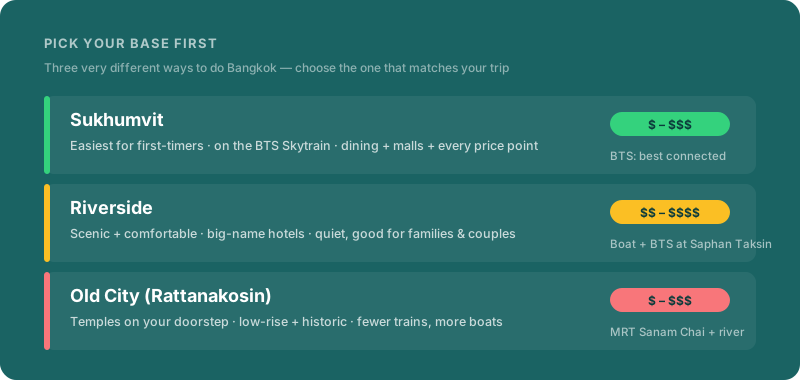
| Base | Best for | Vibe | Getting around | Rough price |
|---|---|---|---|---|
| Sukhumvit | First-timers, foodies, nightlife | Modern, busy, international | On the BTS Skytrain — best connected | $ – $$$ |
| Riverside | Couples, families, comfort | Scenic, calmer, hotel-led | River boat + BTS at Saphan Taksin | $$ – $$$$ |
| Old City (Rattanakosin) | Temples & culture | Historic, low-rise, local | MRT Sanam Chai + river boats | $ – $$$ |
Sukhumvit — easiest for first-timers
Sukhumvit is the long, modern corridor that runs along the BTS Skytrain, packed with restaurants, malls, convenience stores, and hotels at every price point. The stretch roughly between the Nana and Phrom Phong stations is the most practical first-timer base: the Skytrain puts you within about 20–30 minutes of most major sights, and you'll never be far from a 24-hour 7-Eleven or a place to eat. If this is your first Bangkok trip and you want "land, drop your bags, and start exploring," start here.
Riverside — scenic and comfortable
The Riverside is where Bangkok keeps many of its most beautiful hotels, strung along the Chao Phraya. It's quieter and more polished than Sukhumvit, which makes it a favorite for couples and families who want services on tap and a calmer evening. The trade-off is that it's more hotel-led than walkable-neighborhood, so you'll lean on the river boats and the BTS at Saphan Taksin (right by the Central/Sathorn pier) to get around.
Old City (Rattanakosin) — temples on your doorstep
Rattanakosin is Bangkok's historic heart on the east bank of the river — home to the Grand Palace, Wat Pho, Wat Arun (just across the water), the National Museum, and the old royal-court streets. Staying here means rolling out of bed and into the marquee sights, in a lower-rise, more traditional Bangkok of canals and markets. The catch: the Old City historically wasn't on the Skytrain, so you rely more on river boats, the MRT Blue Line (Sanam Chai station), and taxis through traffic.
Don't hotel-hop. Even on a week-long trip, pick one base and take day trips out from it. Dragging a suitcase across town every two nights costs you more time and money than it saves.
How you'll actually get around (rail + river)
Three systems do almost all the useful work, and they connect to each other:
- BTS Skytrain — elevated, fast, air-conditioned; the spine of modern Bangkok (Sukhumvit, Siam, Silom).
- MRT subway — connects to the BTS at several points and reaches the Old City at Sanam Chai, near Wat Pho.
- Chao Phraya Express Boat — the river is a highway. The budget Orange Flag line runs the main central stretch and costs approx. 18 THB a trip, but as of 2026 it runs weekdays only, in limited commuter windows (roughly morning and late-afternoon); a daytime Yellow Flag line covers the midday and weekend gaps at a slightly higher fare. The operator reorganized its lines and timetables during 2026, so confirm the current schedule and fares on the operator's site before relying on it. The hub is the Central (Sathorn) pier, connected to the BTS at Saphan Taksin.
For sightseeing along the river, tourist-oriented hop-on boats also run the same stretch at a higher fare with more frequent service. Either way, the river + BTS combo lets you cross between the Old City and modern Bangkok without sitting in road traffic.
Where to eat: Bangkok's street-food zones by area
Bangkok's street food is best understood as zones, not single restaurants — each area has a personality and a time of day when it shines. Chasing one viral stall across the city usually isn't worth it; picking the right zone for the right hour always is.
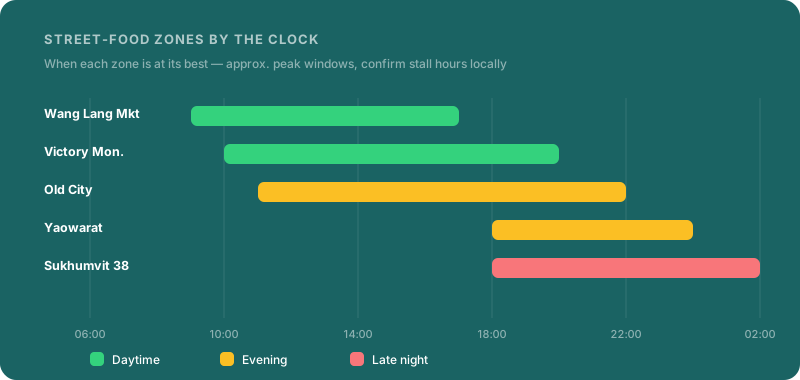
| Zone | What it's known for | Best time | Near which base |
|---|---|---|---|
| Yaowarat (Chinatown) | Bangkok's headline street-food strip — noodles, seafood, Thai-Chinese classics | Evening (~6pm–midnight) | Old City / Riverside |
| Victory Monument | Boat noodles (small, cheap bowls) at a transport hub | Daytime into evening | Sukhumvit-adjacent |
| Wang Lang Market | Riverside local market, snacks and lunch across from Wat Pho | Daytime (~9am–5pm) | Old City / Riverside |
| Sukhumvit Soi 38 | Tourist-friendly evening street eats near the BTS | Late night | Sukhumvit |
| Banglamphu / Old City lanes | Old-school shophouse restaurants and the Khao San area | Afternoon into night | Old City |
A few anchors worth knowing. Yaowarat is the most famous zone — its shophouses and side-lanes light up after dark, and the Michelin Guide has recognized a cluster of long-running stalls here (think decades-old noodle, congee, and curry-rice specialists) with Bib Gourmand nods. Over in the Old City, Jay Fai holds a Michelin star for her crab omelette — the most famous "street food" name in the city — but expect long waits and premium prices, and confirm she's open before making a special trip. For a daytime, local feel, Wang Lang on the Thonburi bank is a quick ferry from the Old City and is built for lunch.
Eat where it's busy and freshly cooked. High turnover is your friend; a stall with a queue of locals is reheating nothing.
What to do: temples, the river, and one big day trip
The Old City temple circuit
The classic half-to-full day links three sights you can do on foot and one short ferry:
- The Grand Palace & Wat Phra Kaew (Temple of the Emerald Buddha) — open daily approx. 08:30–16:30 (last tickets earlier in the afternoon); foreign-visitor entry is approx. 500 THB, which also covers Wat Phra Kaew and the Queen Sirikit Museum of Textiles. There is a strict dress code — cover shoulders and knees; no shorts, sleeveless tops, see-through or torn clothing. Confirm the current fee, hours, and rules on the official site before you go.
- Wat Pho — the giant Reclining Buddha, a short walk from the palace.
- Wat Arun — the riverside "Temple of Dawn," reached by a quick cross-river ferry.
Scam caution: ignore any friendly stranger near the palace who tells you it's "closed today" and offers a tuk-tuk tour instead — it's a long-running gem/tailoring scam. The Grand Palace keeps its own posted hours; check at the official gate.
Day trip: Ayutthaya by train
The best-known day trip is Ayutthaya, the UNESCO-listed former capital (founded 1350) about an hour and a half to two hours north, full of crumbling brick temples and prangs. Most long-distance trains now leave from Krung Thep Aphiwat Central Terminal (the main long-distance station), though some slower Ordinary services still run from the old Hua Lamphong station — check which station your specific train uses. Ordinary 3rd-class fares are famously cheap — on the order of a few baht to ~20 THB — while faster Rapid/Express services cost a little more and are more comfortable; check current train numbers, stations, and times on a Thai rail guide before you go, as the schedule shifts. Once there, rent a bicycle (or hire a tuk-tuk for a few hours) — the ruins are too spread out to walk between comfortably.
Other day trips
If temples aren't your thing, the Damnoen Saduak / Amphawa floating markets and the Maeklong Railway Market (where stalls fold away as a train passes through) make a popular combined day out southwest of the city — easiest by organized tour or private car. Pick one day trip per short visit so you're not spending the whole trip in transit.
Budget plan: what a day in Bangkok costs
Bangkok stretches across budgets better than almost any major city. The chart and table below are per person, per day, excluding international flights, and are deliberately approximate — your real numbers move with the exchange rate, the season, and how much you taxi versus take the BTS.
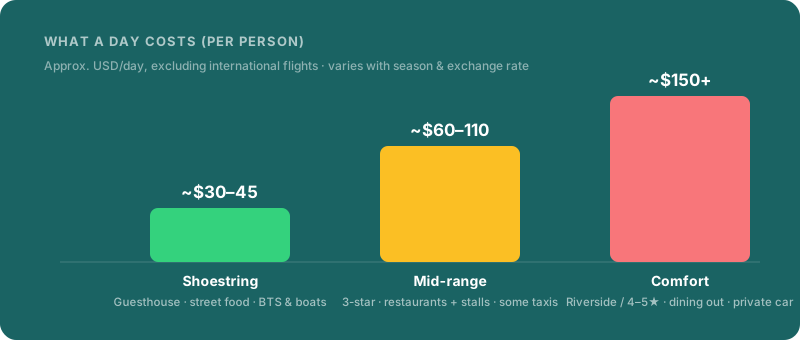
| Tier | Approx. USD / day | What it buys |
|---|---|---|
| Shoestring | ~$30–45 | Hostel or guesthouse bed, street food, BTS + river boats, the odd entry fee |
| Mid-range | ~$60–110 | A clean 3-star near a BTS station, mix of restaurants and stalls, some taxis/Grab |
| Comfort | ~$150+ | Riverside or 4–5★ hotel, sit-down dining, private car, spa/tours |
Two line items to plan around regardless of tier: temple and attraction fees (the Grand Palace alone is ~500 THB) and day-trip transport. Both are easy to underestimate. Everything here is a planning estimate — reprice with today's exchange rate close to departure.
Before you go (quick prep)
You've picked a base, a food plan, and a day trip — three small things left:
- Time it right. Bangkok's cost and comfort swing with the season (cool-dry vs. hot vs. monsoon). For how shoulder timing plays out in Thailand specifically, see Thailand in May: pre-monsoon shoulder season.
- Sort your data. An eSIM gets maps, Grab, and translation working the moment you land — see the travel eSIM plan & device guide to check your phone is compatible.
- Build the trip around your leave. If you're bridging a public holiday to stretch a few days off into a full Bangkok week, run your dates through the leave optimizer first — it shows exactly how many days you can string together.
FAQ
Which Bangkok neighborhood is best for first-time visitors?
Sukhumvit, specifically around the Nana–Phrom Phong BTS stretch. It's on the Skytrain, has hotels at every price, and is full of food and convenience stores — the lowest-friction base for a first trip. Choose Riverside for comfort and scenery, or the Old City (Rattanakosin) if temples are your priority.
Do I really need to stay near the BTS Skytrain?
Near the BTS, the MRT, or a river pier — yes. Bangkok traffic is the single biggest time-sink for visitors, and the rail-and-river network lets you avoid it. If a hotel deal looks great but it's a long taxi from any station or pier, factor that daily cost back in.
Is Bangkok street food safe to eat?
It's one of the world's great street-food cities, and busy stalls with high turnover are generally a good bet — food is cooked fresh in front of you. Favor places with queues of locals, eat freshly cooked hot dishes, and use bottled or filtered water. As anywhere, ease in rather than eating everything at once.
How many days do I need in Bangkok?
About 3–4 days covers the temple circuit, a couple of street-food zones, and one day trip without rushing. Add a day if you want Ayutthaya plus a floating-market trip, or to slow down for shopping and the river.
Sources
- Tourism Authority of Thailand — Bangkok (official) — official district and attraction overview
- The Grand Palace — Practical Information (official) — opening hours, entry fee, dress code
- MICHELIN Guide — Street food stalls in Yaowarat's Chinatown — recognized Chinatown street-food
- Migrationology (Mark Wiens) — Bangkok street-food sanctuaries — zone-by-zone street-food map and timings
- Richard Barrow's Thai Train Guide — Bangkok to Ayutthaya — train station, services, and fares for the day trip
- Chao Phraya Express Boat (official) — river boat lines, fares, and timetables
Prices, opening hours, train schedules, and entry rules change often. Reconfirm every booking-critical detail on the official sites above before you travel.
Next Step
Match this trip idea to your PTO
See which holiday windows make this trip easiest to book, then set reminders before prices move.
Plan this trip windowGet booking-timing and PTO planning emails
Useful tools
Related Articles
New Mexico Travel Guide: Chile, Dunes, and Big Skies
New Mexico rewards drivers with white gypsum dunes, mile-high adobe cities, and green-chile everything, but the distances, altitude, and afternoon storms catch most first-timers off guard.
New York Travel Guide: Beyond the City, Into the State
New York is two trips in one: a dense five-borough metropolis and a huge upstate wilderness of gorges, six-million-acre forests, and lake-effect snow belts that most visitors never reach.
Iceland in November: The Off-Peak Window Before the Christmas-Market Surge
November is the last quiet window before Iceland's Christmas-market prices kick in. Here is exactly how it pencils out -- flights, hotels, Blue Lagoon, Ring Road access -- and how US holidays bridge into it.