Barcelona Neighborhood Guide: Where to Stay and What to Eat — Gothic Quarter vs Eixample vs Barceloneta, plus a Tapas Map, Budget and Day-Trip Plan
Fact-checked July 2, 2026 · 6 sourcesHow we verify
Barcelona rewards travelers who pick the right base. The city is compact enough to walk, but each neighborhood gives you a different trip: medieval alleys, Gaudi boulevards, or a beach two minutes from your door. This is a research guide to the one decision that shapes everything else — where to stay — followed by what to eat by area, an approximate budget, and a simple day-trip plan.
If you are deciding when to go and how few leave days it takes, that is a separate question we cover in Europe's shoulder season: where to go and when. This piece assumes you are going and focuses on what to do once you land.
This is a sourced research post. We stick to slow-changing information — neighborhood character, market names, signature dishes, day-trip routes — and mark everything that moves often (prices, hours, fares, tax bands, train times) as "approx." Confirm the current figures with the official sites listed in Sources before you book.
First, the leave-day math
Barcelona is one of the best long-weekend-to-real-trip upgrades in Europe because the old town, the Gaudi sights and the beach are all within a short walk. A Friday plus a Monday already buys a comfortable city break; add a bridge day and you can fold in a day trip without rushing.
How many days a public holiday actually unlocks depends on your country's calendar. Drop your holidays into the annual leave optimizer to see exactly which bridges turn into a Barcelona-sized window.
- 2–3 nights — Old town + the two headline Gaudi sights. One base, no day trips.
- 4 nights — Add the beach and one market-and-tapas afternoon, or one easy day trip (Sitges or Girona).
- 5+ nights — City + a Gaudi half-day + two day trips (e.g. Montserrat and Girona) at a relaxed pace.
Where to stay — choose the area first
In Barcelona the neighborhood matters more than the hotel name. The old town (Ciutat Vella) puts you next to the guidebook sights and nightlife; the Eixample grid is calmer, greener and full of modernista architecture; Barceloneta trades polish for the beach. Pick the feel you want first, then find a room inside it.
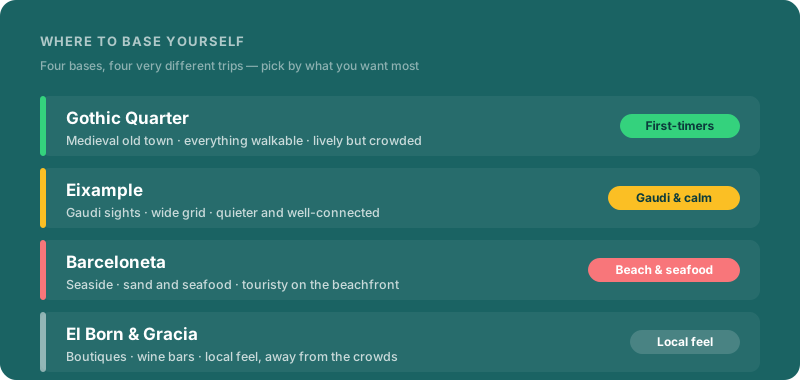
Gothic Quarter (Barri Gotic) — best for first-timers
The historic core: narrow cobbled lanes, hidden courtyards and the cathedral, all in the most central part of the city. From here you can walk to El Raval, the Eixample, El Born and even Barceloneta in roughly 15 minutes. The trade-off is crowds — tour groups fill the main alleys by day, and some streets stay noisy late. Pick a room a block or two off the busiest passages.
Eixample — best for Gaudi, space and a calmer base
Ildefons Cerda's famous grid of wide boulevards and chamfered corners. This is where you will find Sagrada Familia, Casa Batllo and La Pedrera, plus the city's best high-street shopping. It feels more residential and less touristy than the old town, with excellent metro links — a strong pick for families, light sleepers, or anyone planning lots of day trips. The Dreta de l'Eixample (right side) is the most polished stretch.
Barceloneta — best for beach and seafood
A former fishermen's quarter laid out in tight blocks beside the sand. You wake up near the water, the seafood is superb, and the old town is a walk away along the marina. The catch: the beachfront is busy and tourist-priced, and the flats are famously small. Wonderful for a beach-led trip, less ideal if you want a quiet, central all-rounder.
El Born and Gracia — best for a local feel
Two alternatives if you want character without the Gothic Quarter crush. El Born (La Ribera) sits between the Gothic Quarter, the Eixample and the Ciutadella park — central, but with boutiques, the Picasso Museum and the Santa Caterina market on your doorstep. Gracia, just north of the Eixample, has a village-like grid of leafy squares, independent shops and a strong dining scene; it feels genuinely local and is great for stays of three nights or more.
Don't hop hotels every night. Even on a 5-night trip, keep one base and day-trip out from it — you will save money, time and the misery of dragging a suitcase across cobblestones.
What to eat — a tapas and market map
Barcelona food is best remembered by street and market, not by a single "must-visit" restaurant that may have changed since any guide was written. Catalan staples to look for: pa amb tomaquet (toasted bread rubbed with tomato), patatas bravas, the bomba (a meat-filled potato croquette said to have originated in Barceloneta), fideua (a noodle paella), escalivada (smoky roasted veg) and crema catalana for dessert.
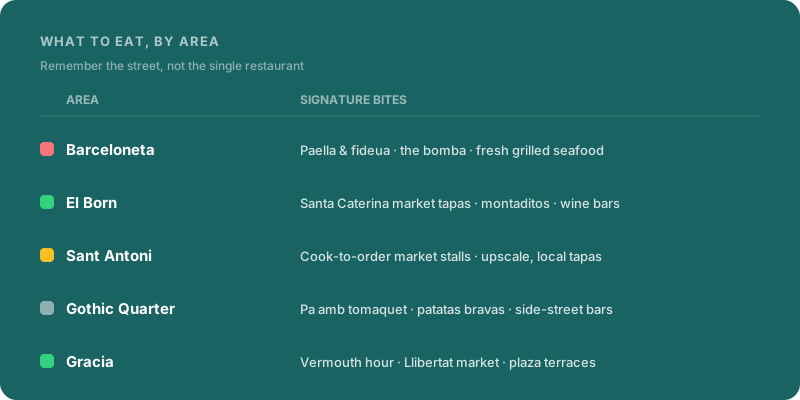
| Area | What to eat there | Anchor market |
|---|---|---|
| Barceloneta | Paella & fideua, the bomba, grilled seafood, vermouth | Mercat de la Barceloneta |
| El Born | Market tapas, montaditos, natural-wine bars | Mercat de Santa Caterina |
| Sant Antoni (Eixample edge) | Cook-to-order stalls, prime cuts and prawns grilled on the spot | Mercat de Sant Antoni |
| Eixample | Upscale tapas, gourmet counters, neighborhood lunch menus | Mercat del Ninot / La Concepcio |
| Gothic Quarter | Classic tapas on the side streets, pa amb tomaquet | (walk to La Boqueria) |
| Gracia | Vermouth hour, plaza terraces, traditional menus | Mercat de la Llibertat |
About La Boqueria
The famous Mercat de Sant Josep de la Boqueria, off La Rambla, has been trading since 1836 and is a genuine spectacle — 200-plus traders, hanging jamon, mountains of fruit and a wall of seafood. It is also the most crowded market in the city and increasingly geared to visitors. Go early (hours are approx. Monday–Saturday, 08:00–20:30; closed Sunday — confirm before visiting), buy from the deeper stalls rather than the photogenic front, and treat it as one stop, not your only one.
Markets locals actually shop
For a calmer, more local experience, aim for Mercat de Santa Caterina in El Born (under its rippling multicolored tiled roof, Barcelona's first covered market from the 1840s) or Mercat de Sant Antoni, which is larger than La Boqueria and far less hectic, with a Sunday second-hand book market alongside. Both have in-market bars where a few stools and a plate of bravas or grilled seafood make an easy, well-priced meal.
A simple daily budget
Below is an approximate, per-person, mid-range, off-peak daily budget in euros. Treat it as a planning range only — your real numbers swing with season, exchange rate and how far in advance you book.
| Item | Approx. per person / day | Notes |
|---|---|---|
| Accommodation | EUR 70–140 | Mid-range double, often split between two people |
| Food (markets + tapas) | EUR 30–55 | Market breakfast is cheap; tapas dinner adds up |
| Local transport | EUR 2–4 | A T-casual 10-ride ticket is approx. EUR 13.00 (zone 1) → ~EUR 1.30/ride |
| Sights & entries | EUR 15–35 | Sagrada Familia approx. EUR 26+, Park Guell approx. EUR 18 |
| Tourist tax | EUR 6–12 / night | Per person, by accommodation class (2026 bands) |
A few money notes, all approx. and worth re-checking:
- Public transport. From 15 January 2026, TMB lists the single zone-1 ticket at approx. EUR 2.90 and the 10-journey T-casual at approx. EUR 13.00 — the T-casual is the obvious buy and can be shared across people on the same trip. The Aerobus from the airport is approx. EUR 7.75 one-way / EUR 13.30 return.
- Tourist tax. Barcelona's per-night accommodation tax roughly doubled from April 2026. Per-person-per-night bands at that point were about EUR 12 for 5-star/luxury hotels, ~EUR 9.50 for short-term tourist rentals, ~EUR 8.40 for 4-star hotels and ~EUR 6 for hostels, with lower bands for other categories. The tax is only charged for the first 7 nights of a stay and children under 16 are exempt. Note that the Barcelona city surcharge portion is scheduled to keep rising each year (to about EUR 6/night in 2027, EUR 7 in 2028), so expect these figures to be roughly EUR 1/night higher by the time you travel. It is usually charged at checkout on top of the room rate — confirm the current figure with your accommodation.
- Sights. Major Gaudi attractions (Sagrada Familia, Park Guell, Casa Batllo) sell timed tickets that regularly sell out in high season. Book the headline sights online in advance; the prices above are approximate and change yearly.
If you are bringing a phone-first travel kit, sort data before you land — see the travel eSIM guide for how many GB you actually need and whether your phone supports it.
Day-trip plan — what's an easy train ride away
Barcelona Sants is a regional hub, so the best day trips are genuinely short. Below are approximate one-way times from the centre; always check live timetables, as operators and schedules change.
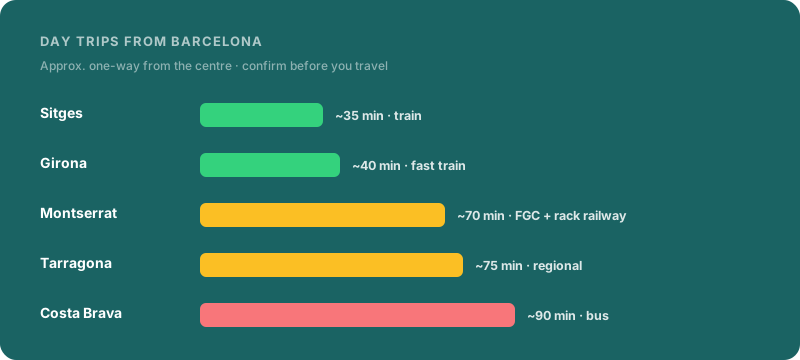
| Destination | Approx. one-way | How | Good for |
|---|---|---|---|
| Sitges | ~30–45 min | Rodalies train from Sants/Passeig de Gracia, ~EUR 5–6 | Beaches, whitewashed old town, easy half-day |
| Girona | ~40 min | High-speed train from Sants (regional is cheaper, slower) | Medieval walls, cathedral, Game of Thrones spots |
| Montserrat | ~60–75 min | FGC line R5 from Plaça Espanya, then rack railway or cable car | Mountain monastery, the Black Madonna, hiking |
| Tarragona | ~30 min AVE / ~75 min regional | Train from Sants | Roman amphitheatre, aqueduct, seaside old town |
| Costa Brava (e.g. Tossa de Mar) | ~90 min | Bus from Estacio del Nord | Coves, clear water, cliff walks |
Sitges and Girona are the lowest-effort picks — frequent trains, short rides, full of life. Montserrat is the most "wow" but adds a transfer (the train, then a cremallera rack railway or aeri cable car up the mountain); buy a combined ticket and start early. For a beach day with a town attached, Sitges beats sitting on Barceloneta's busiest stretch.
How to sequence a 4-night trip
A workable, unhurried shape that uses each base well:
- Day 1 — Gothic Quarter & El Born. Cathedral, narrow lanes, Santa Caterina market for lunch, tapas crawl in El Born at night.
- Day 2 — Eixample & Gaudi. Pre-booked Sagrada Familia in the morning, Passeig de Gracia (Casa Batllo / La Pedrera from outside), Park Guell late afternoon.
- Day 3 — Day trip. Sitges or Girona; back in the city for dinner.
- Day 4 — Barceloneta. Beach morning, seafood and a bomba lunch, vermouth before you fly out.
FAQ
Which Barcelona neighborhood is best for first-time visitors?
The Gothic Quarter for proximity and atmosphere, or the Eixample if you prefer a calmer, better-connected base with the Gaudi sights nearby. First-timers who want to walk everywhere usually pick the old town; light sleepers and families often prefer the Eixample. El Born is a good middle ground — central but less hectic.
Is Barceloneta a good place to stay?
It's excellent for a beach-focused trip: you're steps from the sand and some of the city's best seafood, with the old town a walk away. It's less ideal if you want a quiet, do-everything base — the beachfront is busy and tourist-priced, and the apartments are small. Many travelers visit Barceloneta to eat and swim but sleep elsewhere.
Where do locals actually eat and shop, away from La Boqueria?
Try Mercat de Santa Caterina in El Born and Mercat de Sant Antoni on the Eixample edge — both are bigger-feeling, calmer and more local than La Boqueria, with in-market tapas bars. In Gracia, the Mercat de la Llibertat and the neighborhood's plazas are where the village atmosphere lives.
What's the cheapest way to get around Barcelona?
A T-casual 10-journey ticket (approx. EUR 13.00 for zone 1 as of early 2026) works out to roughly EUR 1.30 per ride on metro, bus and local trains, and can be shared between travelers on the same trip. Much of the centre is walkable, so many visitors barely need transport beyond the airport run and day trips. Confirm the current fare with TMB before you go.
Sources
- Mercat de la Boqueria — official site — market history and opening hours
- TMB — Barcelona metro & bus fares (official) — 2026 T-casual and single-ticket prices
- Barcelona Life — best day trips from Barcelona — day-trip distances and transport
- Do Eat Better — Barcelona's food markets beyond La Boqueria — markets locals use, by neighborhood
- Go Ask A Local — where to stay in Barcelona — neighborhood character and trade-offs
- Idealista — Barcelona's tourist tax (April 2026) — updated per-night tax bands
Prices, hours, fares, tax bands and train times change frequently and were approximate at the time of writing. Confirm the latest figures on the official sites above before booking or traveling.
Next Step
Match this trip idea to your PTO
See which holiday windows make this trip easiest to book, then set reminders before prices move.
Plan this trip windowGet booking-timing and PTO planning emails
Useful tools
Related Articles
New Mexico Travel Guide: Chile, Dunes, and Big Skies
New Mexico rewards drivers with white gypsum dunes, mile-high adobe cities, and green-chile everything, but the distances, altitude, and afternoon storms catch most first-timers off guard.
New York Travel Guide: Beyond the City, Into the State
New York is two trips in one: a dense five-borough metropolis and a huge upstate wilderness of gorges, six-million-acre forests, and lake-effect snow belts that most visitors never reach.
Iceland in November: The Off-Peak Window Before the Christmas-Market Surge
November is the last quiet window before Iceland's Christmas-market prices kick in. Here is exactly how it pencils out -- flights, hotels, Blue Lagoon, Ring Road access -- and how US holidays bridge into it.