Istanbul Neighborhood Guide: Where to Stay, Eat, and Explore
Fact-checked July 2, 2026 · 6 sourcesHow we verify
Istanbul rewards travelers who make one decision early: which side of the city, and which neighborhood, you sleep in. This is a city of roughly 16 million people draped across two continents and split by the Bosphorus — get your base right and the place opens up; get it wrong and you'll spend the trip stuck in traffic or on the wrong ferry. This research guide compares the three bases most visitors actually choose — Sultanahmet, Beyoglu, and Kadikoy — then maps where to eat across the European and Asian sides and gives you a no-backtrack route plus a realistic budget.
This is a sourced research post. The slow-moving facts (which district has what, which food area is known for which dish, where the big monuments sit) are summarized from official and reputable sources. Anything that changes often — prices, opening hours, ferry fares, prayer-time closures, entry rules — is marked "approx." Always reconfirm with the official sites in Sources before you book or travel.
First, pick your base: Sultanahmet vs Beyoglu vs Kadikoy
Istanbul doesn't have one "best" area — it has three good answers depending on what you want from the trip. The rule that beats all others: stay within a short walk of a tram stop, a metro/Marmaray station, or a ferry pier. The historic core sits on the European side in the Old City (Sultanahmet/Fatih); modern Istanbul pulses just north across the Golden Horn in Beyoglu; and the laid-back, increasingly hip local scene is across the water on the Asian side in Kadikoy.
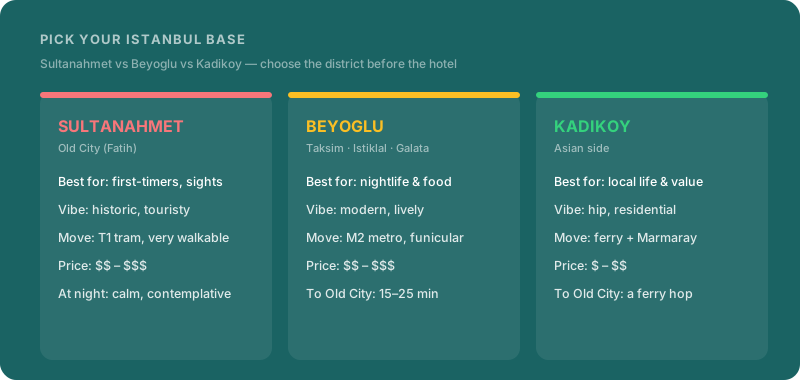
| Base | Best for | Vibe | Getting around | Rough price |
|---|---|---|---|---|
| Sultanahmet (Old City) | First-timers, monuments | Historic, touristy | T1 tram; very walkable | $$ – $$$ |
| Beyoglu | Nightlife, food, longer stays | Modern, lively | M2 metro + funicular | $$ – $$$ |
| Kadikoy (Asian side) | Local life, value | Hip, residential | Ferry + Marmaray | $ – $$ |
Sultanahmet — the monuments on your doorstep
Sultanahmet is the historic peninsula where the headline sights cluster within walking distance of one another: Hagia Sophia, the Blue Mosque, Topkapi Palace, the Basilica Cistern, and the Grand Bazaar. It's relatively flat and walkable — a real plus for families with strollers or anyone with limited mobility — and the T1 tram links it to Eminonu, Karakoy, and across the Golden Horn. The trade-off: by day it can feel like an open-air museum thick with tour groups, restaurants skew toward short-stay visitors (and short-stay prices), and the area turns quiet at night rather than lively. If it's your first trip and you want to roll out of bed into the sights, start here.
Beyoglu — modern Istanbul, food, and nightlife
Beyoglu is where contemporary Istanbul is loudest, anchored by Taksim Square and the long pedestrian spine of Istiklal Street, with the Galata Tower and the buzzy waterfront at Karakoy below. Nineteenth-century European facades sit over bars, music venues, bookshops, meze houses, and boutiques — one of the city's liveliest bases for solo travelers, couples, and anyone who wants dinner and a night out on the doorstep. Everyday services (supermarkets, laundries) make it practical for longer stays too. Budget roughly 15–25 minutes by tram or taxi down to the Old City monuments.
Kadikoy — the Asian side, local and good value
Kadikoy, across the Bosphorus on the Asian side, is the returning visitor's favorite and a strong pick for anyone staying a while. It feels like a real, lived-in city rather than a sightseeing zone: a dense food market, seafront cafes at neighboring Moda, and prices generally below the European side. The Kadikoy ferry terminal connects to Eminonu (for the Old City), Karakoy, and Besiktas, and the undersea Marmaray rail line links it to the historic peninsula in minutes. You'll cross the water more, but that ferry hop is one of the best parts of staying here.
Don't hotel-hop across the strait. Even on a week-long trip, pick one base and take day loops out from it. Dragging a suitcase between continents every two nights costs more time and money than it saves.
How you'll actually get around (rail + ferry + one card)
A handful of systems do almost all the useful work, and one card pays for all of them — the rechargeable Istanbulkart, which works on ferries, metro, tram, Marmaray, funiculars, and buses, with transfer discounts when you change lines.
- T1 tram — the Old City spine: Sultanahmet → Eminonu → Karakoy → Kabatas.
- M2 metro + F1 funicular — climbs from the Bosphorus up to Beyoglu (Sishane/Taksim).
- Marmaray — the undersea rail line that crosses the Bosphorus (Sirkeci ↔ Uskudar ↔ the Asian side) in minutes.
- Sehir Hatlari ferries — the scenic way to cross. With an Istanbulkart, Kadikoy–Eminonu runs approx. 59 TL and Uskudar–Eminonu approx. 53 TL (fares effective around June 2026 — Istanbul transit prices rise often, so reconfirm on the operator's site).
For a longer cruise up the strait, the same operator runs a Bosphorus tour ferry at a higher fare. But for getting around, a normal commuter ferry crossing is cheap, takes roughly 15–20 minutes, and doubles as the best-value sightseeing you'll do all trip.
Where to eat: a food map across both sides
Istanbul's food is best understood by area, not single restaurants — each neighborhood has a specialty and a time of day when it shines. Chasing one viral spot across two continents rarely pays; picking the right area for the right craving always does.
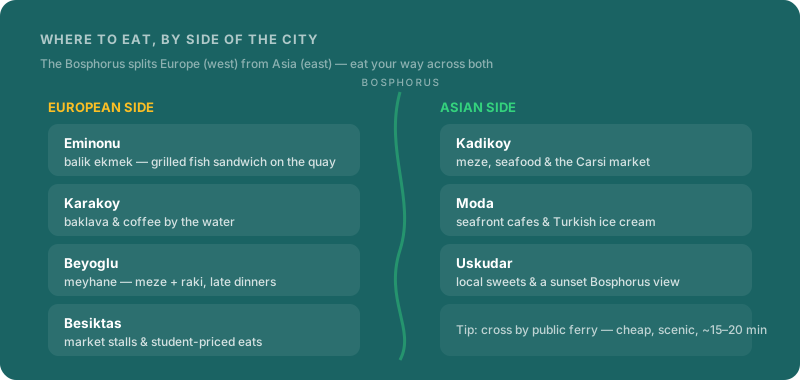
| Area | Side | Known for | When it shines |
|---|---|---|---|
| Eminonu | European | Balik ekmek — grilled fish sandwich on the waterfront | Daytime, by the quay |
| Karakoy | European | Baklava and Turkish coffee by the water | Anytime; sweet stops |
| Beyoglu | European | Meyhane — meze plates with raki | Evening, long dinners |
| Kadikoy | Asian | Meze, seafood, the Carsi market, kokorec, midye dolma | Late morning into night |
| Moda / Uskudar | Asian | Seafront cafes, ice cream, local sweets | Afternoon, sunset |
A few anchors worth knowing. Eminonu's grilled fish sandwich, made to order near the Galata Bridge and handed over with a lemon wedge, is the city's signature street bite. Karakoy is the name people say for baklava — paper-thin pastry with crushed pistachio — with at least one famous house operating since the 1940s; confirm opening hours before a special trip. Over on the Asian side, Kadikoy's market (the Carsi) is a sensory overload of produce, fish, kokorec, and meze, and the neighborhood is known for Anatolian regional cooking. Because these are areas rather than single addresses, you can't really go wrong — wander in hungry.
Eat where it's busy and freshly cooked. High turnover means nothing is sitting around; a counter with a queue of locals is a safe bet.
What to do: the Old City monuments, the strait, and the Asian side
The Sultanahmet monument circuit
The classic day links a tight cluster of sights you can mostly walk between:
- Hagia Sophia — the sixth-century landmark, now an active mosque. Tourist entry to the upper gallery is approx. EUR 25, and because it's a working mosque it closes to tourists during the five daily prayer times (the longest is Friday noon, roughly 12:00–14:30). Dress code: shoulders and knees covered; women need a headscarf. The Museum Pass does not cover it. Confirm the current fee, prayer-closure windows, and rules before you go.
- Blue Mosque (Sultanahmet Camii) — across the square, free to enter; also closed to tourists during prayers, same modest dress.
- Topkapi Palace — the Ottoman court complex. A combined ticket (palace + Harem + Hagia Irene, sold as one ticket since 2026) is approx. 2,750 TL for foreign visitors; hours are roughly 09:00–18:00 in summer (Apr 1–Oct 31, last entry ~17:00) and 09:00–16:30 in winter (Nov 1–Mar 31), and it's typically closed Tuesdays. The Museum Pass covers the palace but not the Harem or Hagia Irene.
- Basilica Cistern (Yerebatan) — the floodlit underground cistern; entry is approx. 1,950 TL by day and approx. 3,000 TL for the atmospheric evening session. The Museum Pass is not valid here.
- Grand Bazaar — free to enter, a covered maze of thousands of shops; generally closed Sundays.
Is the Museum Pass Istanbul worth it? The 5-day pass is approx. EUR 105 and covers around a dozen ministry museums (Topkapi included), but not Hagia Sophia or the Basilica Cistern — two of the things visitors most want. Do the math against the specific sites you'll actually enter before buying; for a short, monument-light trip, paying per site is often cheaper.
Cross the Bosphorus
Build in at least one ferry. A commuter crossing from Eminonu or Karakoy to Kadikoy or Uskudar costs a couple of dollars, takes 15–20 minutes, and gives you the skyline, the gulls, and a glass of tea — the cheapest "cruise" in the city. Up top, Galata Tower and the Istiklal Street promenade in Beyoglu fill an easy half-day, and the Spice Bazaar at Eminonu pairs neatly with that fish-sandwich lunch.
Spend a day on the Asian side
Give Kadikoy a half- or full day on its own: graze the market, take meze and seafood for lunch, then walk the seafront to Moda for coffee and ice cream as the light drops over the water. It's the easiest way to see how locals actually live — and the best argument for why some travelers never base themselves in the Old City at all.
A 4-day route that doesn't backtrack
Istanbul punishes zig-zagging across the strait. This loop keeps each day in one zone and saves the ferry for when it's the scenic choice rather than a chore.
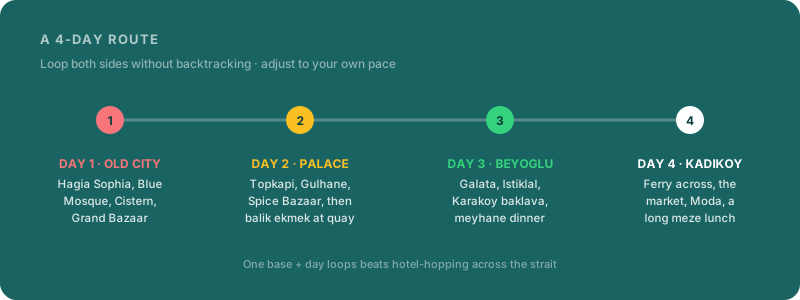
- Day 1 — Old City sights. Hagia Sophia, the Blue Mosque, the Basilica Cistern, and the Grand Bazaar, all on foot around Sultanahmet.
- Day 2 — Palace + bazaar + first ferry. Topkapi Palace and Gulhane Park in the morning, the Spice Bazaar at Eminonu, then a balik ekmek by the water and a short ferry hop.
- Day 3 — Beyoglu. Galata Tower, Istiklal Street, baklava in Karakoy, and a meyhane dinner with meze and raki.
- Day 4 — Kadikoy (Asian side). Ferry across, work the market, lunch on meze and seafood, and finish on the Moda seafront.
Three days is enough for the Old City plus one cross-strait day; four lets you slow down and actually live in Beyoglu and Kadikoy rather than tick them off.
Budget plan: what a day in Istanbul costs
Istanbul stretches across budgets unusually well, and the weak Turkish lira has made it a relative bargain for visitors paying in dollars or euros — though that same volatility means any figure here is a moving target. The chart and table below are per person, per day, excluding international flights, and deliberately approximate.
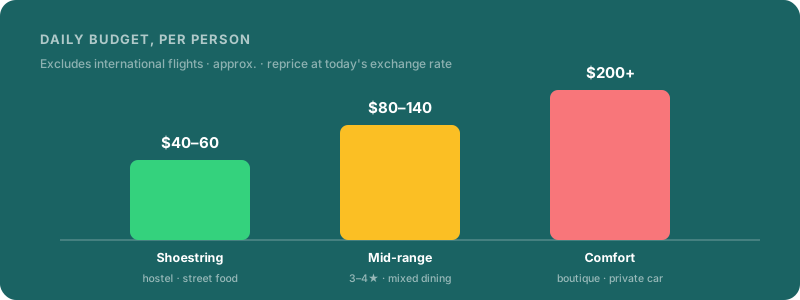
| Tier | Approx. USD / day | What it buys |
|---|---|---|
| Shoestring | ~$40–60 | Hostel or guesthouse bed, street food (fish sandwich, kokorec), Istanbulkart transit, the odd entry fee |
| Mid-range | ~$80–140 | A clean 3–4★ near a tram or ferry, a mix of restaurants and meze houses, some taxis |
| Comfort | ~$200+ | Boutique or Bosphorus-view hotel, sit-down dining, private transfers, a Bosphorus cruise |
Two line items to plan around regardless of tier: monument fees (Hagia Sophia ~EUR 25 and Topkapi ~2,750 TL add up fast) and the exchange rate, which moves enough that you should reprice close to departure. Everything here is a planning estimate, not a quote.
Before you go (quick prep)
You've picked a side, a base, a food plan, and a route — three small things left:
- Time it right. Istanbul's crowds and prices swing hard with the season. For why the shoulder months pencil out — atmospheric city, fewer queues, lower flights — see Turkey in November: Cappadocia without the balloon queue and the wider shoulder-season travel guide.
- Sort your data. An eSIM gets maps, ferry apps, and translation working the moment you land — see the travel eSIM plan & device guide to check your phone is compatible.
- Build the trip around your leave. If you're bridging a public holiday to stretch a few days off into a full Istanbul week, run your dates through the leave optimizer first — it shows exactly how many days you can string together.
FAQ
Which Istanbul neighborhood is best for first-time visitors?
Sultanahmet (the Old City), because the headline monuments — Hagia Sophia, the Blue Mosque, Topkapi, the Basilica Cistern, and the Grand Bazaar — are within walking distance and it's on the T1 tram. Choose Beyoglu instead if you want food and nightlife on the doorstep, or Kadikoy on the Asian side for a cheaper, more local base on a longer stay.
Should I stay on the European or the Asian side?
The European side (Sultanahmet or Beyoglu) keeps you closest to the main sights and is the simpler choice for a first, short trip. The Asian side (Kadikoy) is more local, generally cheaper, and a favorite for return visitors or anyone staying a week — you just rely on the ferry and Marmaray to reach the monuments, which most people end up enjoying.
How do I pay for ferries and transit in Istanbul?
Buy an Istanbulkart, the rechargeable card that works across ferries, tram, metro, Marmaray, funiculars, and buses, with discounts when you transfer between lines. A scenic cross-Bosphorus ferry (for example Kadikoy–Eminonu) runs only a couple of dollars — approx. 59 TL as of mid-2026, but reconfirm, as Istanbul fares rise often.
Is the Museum Pass Istanbul worth buying?
Only if you'll enter enough covered museums to beat per-site prices. The 5-day pass is approx. EUR 105 and includes Topkapi Palace and about a dozen ministry museums — but not Hagia Sophia or the Basilica Cistern, two of the most-visited sights. For a short, monument-light trip, paying at each site is often cheaper; do the math against your own list first.
Sources
- Go Ask A Local — Where to Stay in Istanbul — neighborhood-by-neighborhood base comparison
- The Istanbul Insider — Entrance fees of Istanbul's main attractions (2026) — fees and hours for Hagia Sophia, Topkapi, the Cistern, and free sites
- Hagia Sophia — Entrance fee, prayer closures & dress code — tourist entry, active-mosque prayer-time closures, and dress rules
- Museum Passes of Türkiye — Directorate of Culture & Tourism (official) — official Museum Pass Istanbul price, validity, and included sites
- Sehir Hatlari — Ferry price list (official operator) — current Istanbulkart ferry fares for Bosphorus routes
- Istanbul.com — Istanbul street food: 25 must-try flavors — dishes mapped to the areas that are known for them
Prices, opening hours, ferry fares, prayer-time closures, and entry rules change often — and the Turkish lira is volatile. Reconfirm every booking-critical detail on the official sites above before you travel.
Next Step
Match this trip idea to your PTO
See which holiday windows make this trip easiest to book, then set reminders before prices move.
Plan this trip windowGet booking-timing and PTO planning emails
Useful tools
Related Articles
New Mexico Travel Guide: Chile, Dunes, and Big Skies
New Mexico rewards drivers with white gypsum dunes, mile-high adobe cities, and green-chile everything, but the distances, altitude, and afternoon storms catch most first-timers off guard.
New York Travel Guide: Beyond the City, Into the State
New York is two trips in one: a dense five-borough metropolis and a huge upstate wilderness of gorges, six-million-acre forests, and lake-effect snow belts that most visitors never reach.
Iceland in November: The Off-Peak Window Before the Christmas-Market Surge
November is the last quiet window before Iceland's Christmas-market prices kick in. Here is exactly how it pencils out -- flights, hotels, Blue Lagoon, Ring Road access -- and how US holidays bridge into it.