Osaka Food Map and Where to Stay by Neighborhood
Fact-checked July 2, 2026 · 5 sourcesHow we verify
Osaka is a short-haul favorite for one reason: you spend very little time getting there and almost all of it eating. This is a research guide built around the three decisions that actually shape an Osaka trip — where to stay, what to eat where, and what it costs. Pre-trip logistics like power adapters, entry paperwork, and travel data live in their own guides; here we focus on the city itself.
This is a sourced research post. The durable stuff — neighborhoods, districts, signature dishes — is summarized from the official and reference sources listed at the bottom. Anything that moves fast — prices, hours, entry rules, holiday dates — is marked "approx." Re-confirm those on the official sites in Sources before you book.
If you are trying to turn a public holiday into a longer trip, plug your dates into the annual leave optimizer first, then come back and decide the where/what/how-much below.
Quick orientation: Kita vs Minami
Osaka splits into two poles, and almost everything you'll do sits between them (Japan Guide):
- Kita ("north"), centered on Umeda — the grown-up, glassy side of the city. It wraps the giant JR Osaka Station / Umeda station complex, the head offices, the high-end department-store food halls (depachika), and the Umeda Sky Building observation deck.
- Minami ("south"), centered on Namba — the entertainment side: Dotonbori's neon canal, the Shinsaibashi shopping arcade, and most of the street food and nightlife.
Your neighborhood choice mostly decides how far you walk, how much you spend, and how loud your evenings are. Sort that out before you compare hotels.
Where to stay, neighborhood by neighborhood
The single most useful move in Osaka is to pick the area first, then the hotel. Here's how the main bases trade off.
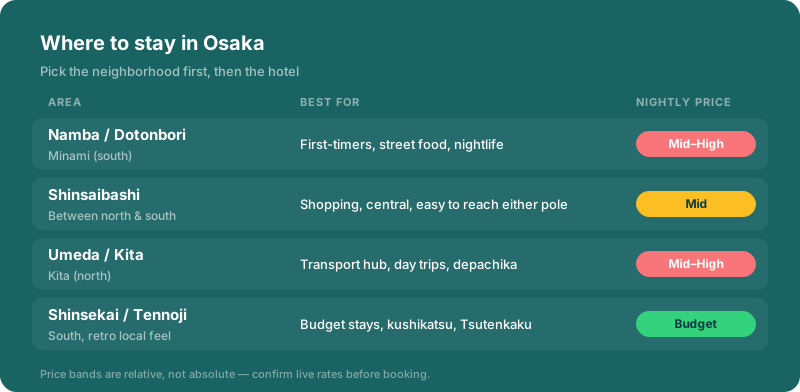
| Area | Pole | Best for | Nightly price (relative) |
|---|---|---|---|
| Namba / Dotonbori | Minami (south) | First-timers, street food, nightlife on foot | Mid–High |
| Shinsaibashi | Between the two | Shopping, central, easy to reach either pole | Mid |
| Umeda / Kita | Kita (north) | Transport hub, day trips, department stores | Mid–High |
| Shinsekai / Tennoji | South | Budget stays, kushikatsu, retro local vibe | Budget |
- Namba / Dotonbori — the default for a first visit. The Glico sign, the food alleys, and the canal are all walkable, and the Midosuji subway line connects you to the rest of the city. The trade-off is noise and crowds; light-sleepers should look a block or two off the main drag (Bon Traveler).
- Umeda / Kita — the smart base for day-trippers. Four subway lines plus the JR hub converge here, so Kyoto, Nara, Kobe, and the airport are all fastest from Umeda. It feels more like a business district and reads "polished" rather than "lively."
- Shinsaibashi — the in-between. Sitting on the Shinsaibashi-suji arcade puts shopping at your door and keeps both poles a short ride away. A safe middle pick.
- Shinsekai / Tennoji — the budget play. The kushikatsu-and-Tsutenkaku district has the cheapest beds and a strong retro atmosphere, with good rail links at Tennoji Station.
Don't drag a suitcase to a new hotel every night. Even on a longer trip, keep one base (two at most) and use day trips. It's cheaper and far less tiring.
The Osaka food map: what to eat where
Osaka earned the nickname tenka no daidokoro — "the nation's kitchen." The trick for visitors is to remember food by street, not by single shop, because specific restaurants open, close, and grow queues unpredictably. Anchor on the area and you'll eat well no matter which storefront you pick.
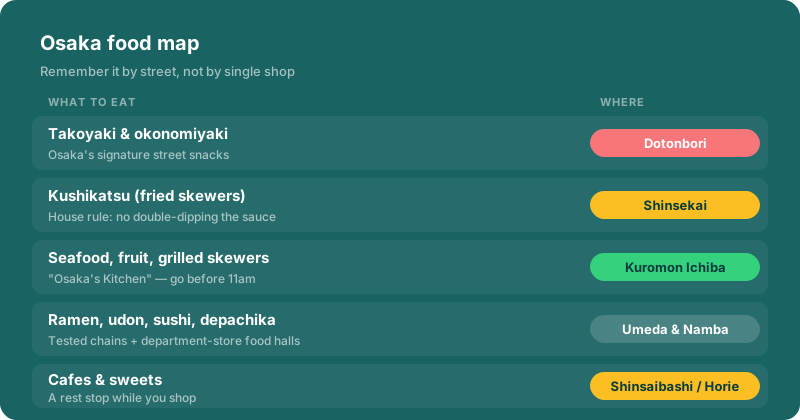
| What to eat | Where | One line |
|---|---|---|
| Takoyaki & okonomiyaki | Dotonbori | Osaka's signature street snacks; stands line the canal and side alleys |
| Kushikatsu (fried skewers) | Shinsekai | The house rule, posted everywhere: no double-dipping the shared sauce |
| Seafood, fruit, grilled skewers | Kuromon Ichiba market | "Osaka's Kitchen"; go before ~11am for the freshest, calmest run |
| Ramen, udon, sushi, depachika | Umeda & Namba | Tested chains near stations + department-store basement food halls |
| Cafes & sweets | Shinsaibashi / Horie | A rest stop while you shop |
- Takoyaki and okonomiyaki are the two dishes most associated with the city; takoyaki (battered octopus balls) is a walk-and-eat snack, while okonomiyaki (a savory cabbage pancake) is the sit-down version, sometimes grilled at your table (Japan Guide food guide).
- Kushikatsu — battered, deep-fried skewers — is the soul of Shinsekai, the nostalgic district under Tsutenkaku tower. The one ironclad rule (nido-zuke kinshi) is no second dip into the communal sauce pot (Eat in Japan).
- Kuromon Ichiba is a covered market of roughly 150+ stalls selling sashimi-on-a-stick, grilled scallops and crab, tamagoyaki, and seasonal fruit. It's busiest and best earlier in the day.
Osaka also has serious fine dining, but for most travelers the street-and-area approach above covers it. Whatever you target, check the shop's hours in a maps app the same day — Osaka kitchens keep their own schedules.
What to do: city sights and day trips
In the city (half a day to a day each)
- Osaka Castle — the keep and its park; especially good in cherry-blossom and autumn-foliage seasons.
- Umeda Sky Building "Floating Garden" observatory — the top city-night-view pick; time it for sunset.
- Shinsekai & Tsutenkaku — a retro stroll that pairs naturally with a kushikatsu dinner.
- Dotonbori & Shinsaibashi — the Glico-sign photo, a canal walk, and the shopping arcade.
- Universal Studios Japan (USJ) — a full-day theme park out in the bay area. If you're going, look at advance/express tickets early; entry prices and hours change, so confirm on the official site.
Day trips (about 30–60 minutes out)
Osaka is the rail hub of the Kansai region, which makes single-day side trips easy. Approximate train times from central Osaka (Japan Travel by NAVITIME):
| Day trip | Approx. train time | Known for |
|---|---|---|
| Kyoto | ~30–50 min | Kiyomizu-dera, Fushimi Inari's torii gates, Arashiyama |
| Nara | ~under 1 hr | Nara Park's deer, the Todai-ji Great Buddha |
| Kobe | ~20–30 min | Kobe beef, the Kitano district, harbor night views |
Kyoto is the most popular; Nara is a half-day and pairs well with Kyoto. For timing the whole trip around the cheaper, less-crowded shoulder months, see Japan without the crowds: off-peak windows and the broader shoulder-season travel guide.
Budget snapshot: what a few days really costs
Below is a rough on-the-ground budget for one person over six nights, excluding international flights (those depend entirely on where you fly from). Treat every number as a band, not a quote — lodging shifts with season, food with appetite, and the JPY→USD figure with the exchange rate.
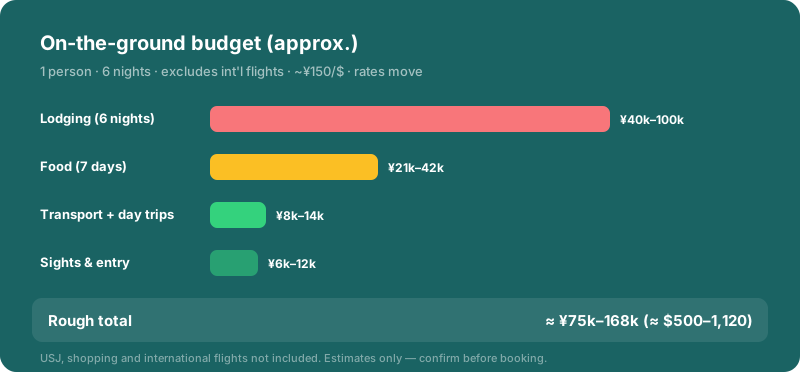
| Item | Approx. (JPY) | Approx. ($) | Note |
|---|---|---|---|
| Lodging (6 nights) | ¥40,000 – ¥100,000 | $250 – $625 | Shinsekai guesthouse → Umeda business hotel |
| Food (7 days) | ¥21,000 – ¥42,000 | $130 – $265 | Street-food-led keeps it low |
| Local transport + day trips | ¥8,000 – ¥14,000 | $50 – $90 | IC card + Kyoto/Nara round trips |
| Sights & entry | ¥6,000 – ¥12,000 | $38 – $75 | USJ adds roughly ¥9,000+ |
| Total (approx.) | ¥75,000 – ¥168,000 | ≈ $470 – $1,050 | Excludes USJ, shopping & flights |
Dollar figures use a rough ¥160 to $1 rate purely to give a sense of scale (the yen has traded weak — roughly ¥150–165 per dollar through 2025–2026). A weak yen makes the real cost feel lower for dollar-holders (and tax-free shopping helps), but the rate moves constantly — recalculate at the current rate right before you go.
Before you book
Once you've settled where/what/how-much, two practical items are easy to forget:
- Power, entry paperwork, and an IC card — Japan runs on 100V, and the official Visit Japan Web portal speeds up immigration and customs (recommended, though paper forms are still accepted); a rechargeable IC card (ICOCA/Suica) covers nearly all local transit. Lock these down before departure.
- Mobile data — an eSIM is the cleanest way to have maps and translation working the moment you land. See the travel eSIM plan and device guide to check how much data you need and whether your phone supports it.
And if a national holiday is anywhere near your travel window, the annual leave optimizer will show you the cheapest way to stretch it into a longer trip.
FAQ
How many days do I need in Osaka?
For the city alone, 3 nights is comfortable. Add Kyoto and/or Nara and you'll want 4–6 nights. Anything past that and you're really doing a Kansai trip with Osaka as the base, which it does well thanks to the rail links.
Should I stay in Namba or Umeda?
If it's your first visit and you want food and nightlife on foot, choose Namba / Dotonbori. If you'll do lots of day trips or prefer a calmer, polished base, choose Umeda / Kita. To save money, look at Shinsekai / Tennoji; for a central compromise, Shinsaibashi.
What's the one Osaka food I shouldn't skip?
Takoyaki in Dotonbori is the signature, but the most "Osaka" experience is an evening of kushikatsu in Shinsekai — just remember the no-double-dipping rule for the shared sauce.
Is Osaka expensive?
It can be cheap if you lean into street food and stay south. Our rough on-the-ground estimate lands around ¥75,000–¥168,000 (≈ $470–$1,050) for six nights, excluding international flights and USJ — but prices and the exchange rate move, so confirm before booking.
Sources
- OSAKA-INFO — Osaka Convention & Tourism Bureau (official) — attractions, food, transport, and event information
- JNTO — Osaka destination guide — areas, signature foods, and regional overview
- Japan Guide — Osaka food guide — signature dishes and the districts they belong to
- Japan Guide — Osaka districts — Kita, Minami, Shinsekai, Tennoji, and the bay area
- Japan Travel by NAVITIME — day trips from Osaka — approximate rail times to Kyoto, Nara, and Kobe
- Eat in Japan — Osaka street food guide — Dotonbori, Shinsekai, and Kuromon Market eating notes
Prices, hours, entry rules, exchange rates, and holiday dates change often. Re-check the official sites above before you book or travel.
Next Step
Match this trip idea to your PTO
See which holiday windows make this trip easiest to book, then set reminders before prices move.
Plan this trip windowGet booking-timing and PTO planning emails
Related topics
Useful tools
Related Articles
New Mexico Travel Guide: Chile, Dunes, and Big Skies
New Mexico rewards drivers with white gypsum dunes, mile-high adobe cities, and green-chile everything, but the distances, altitude, and afternoon storms catch most first-timers off guard.
New York Travel Guide: Beyond the City, Into the State
New York is two trips in one: a dense five-borough metropolis and a huge upstate wilderness of gorges, six-million-acre forests, and lake-effect snow belts that most visitors never reach.
Iceland in November: The Off-Peak Window Before the Christmas-Market Surge
November is the last quiet window before Iceland's Christmas-market prices kick in. Here is exactly how it pencils out -- flights, hotels, Blue Lagoon, Ring Road access -- and how US holidays bridge into it.