Lisbon Neighborhood Guide: Where to Stay, Eat, and Explore
Fact-checked July 2, 2026 · 7 sourcesHow we verify
Lisbon rewards travelers who decide where to stay before they pick a hotel. The city is a stack of distinct hill-and-valley neighborhoods, and the one you book changes your whole trip — how far you walk, how steep the cobblestones are at midnight, and what's on the plate around the corner. This research guide does three things: it helps you choose a stay district, maps what to eat by neighborhood, and lays out Sintra and Cascais day trips with a sample budget. Entry rules, eSIM, and Schengen paperwork live in their own guides; this one is about being on the ground.
This is a research post written with cited sources. We kept the body to things that change slowly — district character, terrain, signature dishes, day-trip geography — and marked everything volatile (prices, fares, ticket costs, hours, entry rules) as "approx." Always reconfirm on the official sites in Sources before you book or travel.
First, turn a few PTO days into a city break
Lisbon is a classic long-weekend-plus city. Two well-placed days off bridged onto a weekend gives you a comfortable 4–5 nights: enough for the old town plus one day trip. Add a public holiday and you can stretch to a week without burning much leave.
How many days your calendar can produce depends on where the holidays fall this year. Drop your dates into the annual-leave optimizer to see the longest break your balance can buy. If you're weighing months, our Europe shoulder-season guide explains why spring and fall stretch a travel budget further.
- 3 nights — old town only: Baixa, Chiado, Alfama, a sunset miradouro, and a food crawl.
- 4–5 nights — add one day trip (Sintra or Cascais).
- 6–7 nights — old town + Sintra + Cascais + Belém, unhurried.
When to go — Lisbon by month
Lisbon's weather is mild most of the year, so the real lever is value: flights and hotels swing hard between shoulder season and the summer/holiday peak.
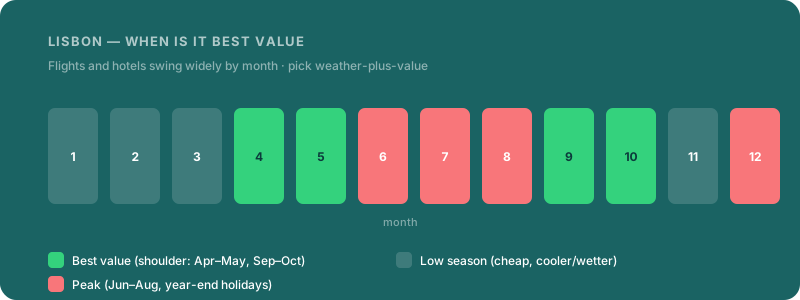
- Best value (shoulder): April–May and September–October. Warm-but-not-hot days, lighter crowds, and hotel rates well below summer. This is the sweet spot for most travelers.
- Peak: June–August brings heat, cruise crowds, and the highest prices — though June's Santo António street-party season (grilled sardines everywhere) is a genuine draw. Late December spikes again for the holidays.
- Low season: January–March and November are the cheapest months. Lisbon stays mild by European standards, but you trade some rain and shorter days for the savings.
Even within a cheap month, weekend departures cost more. Flying midweek out and back usually shaves both airfare and hotel.
Where to stay — pick the district first
Lisbon's neighborhoods sit on hills, and terrain matters more than you'd expect when you're dragging a suitcase. Decide the district's character first; the hotel is secondary.
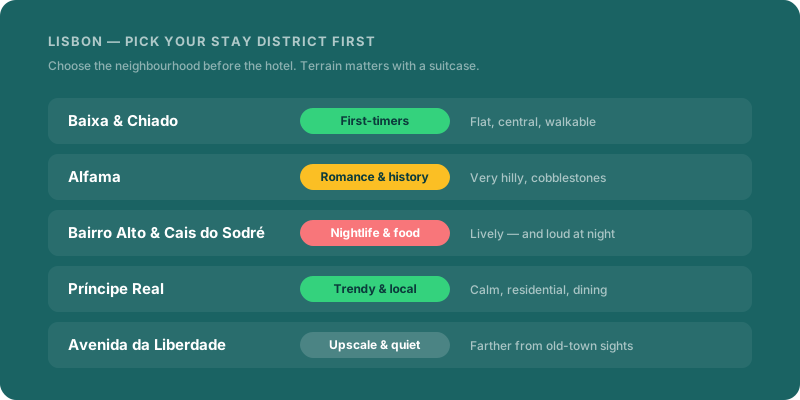
- Baixa & Chiado (first-timers). Baixa is the flat, grid-planned downtown between the river and Rossio — the most forgiving base if you have a suitcase or mobility concerns, but also the most touristy. Chiado, just uphill, is the best all-round base: central and walkable, with more charm and great restaurants on its doorstep.
- Alfama (romance & history). Lisbon's oldest quarter — a maze of lanes, fado, and viewpoints. Gorgeous, but very hilly with uneven cobblestones, and cars and rideshares struggle in the narrow streets. Pack light if you stay here.
- Bairro Alto & Cais do Sodré (nightlife & food). Bairro Alto's tiny bars spill into the streets at night; Cais do Sodré (home of the Time Out Market) is the riverside nightlife strip. Both are lively and loud — great if you want it, light sleep if you don't.
- Príncipe Real (trendy & local). A calmer, leafy, residential-feeling area above Bairro Alto with some of the city's best contemporary small-plate dining. A good "second-trip" base.
- Avenida da Liberdade (upscale & quiet). Lisbon's grand boulevard — flagship hotels, designer shops, a quieter feel. Flatter than the old town but farther from the historic sights, so expect a walk or a short metro hop.
Don't hotel-hop. Even on a 6–7 night trip, keep one base and day-trip out. Moving luggage across cobbled hills costs more time and energy than any itinerary saves.
What to eat — Lisbon's food map by neighborhood
Lisbon food is easiest to remember by where you eat it rather than by chasing single addresses. Anchor on the dish and the district; pick the specific spot once you're there.
| Eat this | Where | One line |
|---|---|---|
| Pastel de nata (custard tart) | Belém (the original), plus city-center bakeries | The classic is in Belém; excellent versions are now all over town |
| Bifana (marinated pork sandwich) | Stand-up counters citywide | Order at the balcão (counter) — faster, cheaper, and what locals do |
| Bacalhau (salt cod, many ways) | Baixa & Alfama tascas | Old-school taverns serve cod in its many traditional forms |
| Petiscos (small plates to share) | Bairro Alto, Chiado, Príncipe Real | Portugal's answer to tapas — cod croquettes, peixinhos da horta, grilled chouriço |
| Tasca lunch (cheap set menu) | Mouraria | The multicultural old quarter is unbeatable for honest, low-cost tascas |
| Market grazing | Time Out Market, Cais do Sodré | One hall, many of the city's kitchens — easy first-night sampler |
| Grilled sardines | Alfama, peak in June | Santo António season turns the old streets into open-air grills |
Wash it down with a tiny glass of ginjinha (sour-cherry liqueur) from a hole-in-the-wall near Rossio. Restaurant openings, hours, and waits shift constantly, so check the map app before you set out — and remember many tascas are cash-friendly and lunch-focused.
What to do — sights plus two day trips
In the city (half-day each)
- Alfama & the miradouros — wander up to viewpoints like Portas do Sol; ride Tram 28 through the old town (early, before the crowds).
- Baixa & the riverfront — the Arco da Rua Augusta, Praça do Comércio, and the elevated walks above downtown.
- Belém — the Jerónimos Monastery and Belém Tower, then the original pastéis de nata. Reachable by tram or train along the river.
- Bairro Alto & Cais do Sodré — sunset drinks, then dinner; the Time Out Market if you can't decide.
A Lisboa Card (24/48/72h, approx.) bundles unlimited public transport with free or discounted entry to many museums and monuments — and it covers the CP trains to Sintra and Cascais, which can make the day trips below effectively free on transport. Confirm current prices and inclusions on the official card site before buying.
Day trip 1 — Sintra (the must-do)
Sintra is a hillside of fairy-tale palaces about 40 minutes by train from central Lisbon (Rossio station; approx. €5 return). From Sintra station, the 434 tourist bus loops to the main sights (approx. €13.50 for a 24-hour pass) — but it shares one congested road, so a taxi saves no real time.
The headline sights: Palácio da Pena (full interior approx. €20; grounds-only cheaper), Quinta da Regaleira (approx. €20), and the Castelo dos Mouros (approx. €12). Crucially, Pena and Regaleira use timed-entry tickets you should pre-book online — morning slots sell out days ahead in peak season. Don't try to do all three plus Cabo da Roca and Cascais in one day; pick two Sintra sites and go early.
Day trip 2 — Cascais (the easy one)
Cascais is a breezy seaside town about 33–40 minutes by train from Cais do Sodré station (single fare approx. €2.50, trains roughly every 15–30 minutes). It's the low-effort counterpoint to Sintra: a walkable old town, beaches, and seafood, with no timed tickets to juggle. Many travelers combine it with Cabo da Roca (mainland Europe's westernmost point) by local bus on the way to or from Sintra.
A sample Sintra day-trip budget
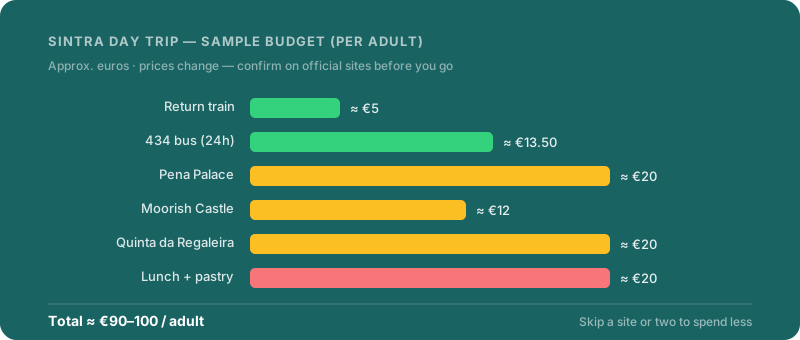
Here's a realistic per-adult day in Sintra. Treat every figure as approx. — fares and entry prices change, and the Lisboa Card can zero out the transport line.
| Item | Approx. cost | Note |
|---|---|---|
| Return train (Lisbon–Sintra) | €5 | Free with Lisboa Card |
| 434 tourist bus (24h pass) | €13.50 | Shares the road — go early |
| Palácio da Pena | €20 | Pre-book timed entry |
| Castelo dos Mouros | €12 | Great views, fewer queues |
| Quinta da Regaleira | €20 | Pre-book timed entry |
| Lunch + a pastry | €20 | Cheaper away from the palace gates |
| Total (approx.) | €90–100 | Drop a site to spend less |
Doing two palaces instead of three, or skipping the bus pass for a single ride, brings this down meaningfully. Always confirm current prices on the official Parques de Sintra site before you commit.
Before you go — a quick checklist
You've decided the where, what, and how. Two practical things to square away:
- Entry rules. Portugal is in the Schengen Area, and visa-exempt visitors will need the new ETIAS authorization once it's in force — see our ETIAS guide for travelers. Confirm the current requirement before you fly.
- Data on arrival. A travel eSIM gets maps and translation working the moment you land; our travel eSIM guide covers how much data you need and whether your phone supports it.
FAQ
Where should first-time visitors stay in Lisbon?
For a first trip, base yourself in Chiado or Baixa — central, walkable, and (in Baixa) refreshingly flat. Choose Alfama for atmosphere if you can travel light, Bairro Alto or Cais do Sodré for nightlife, and Príncipe Real or Avenida da Liberdade for a calmer, more upscale stay.
How many days do you need in Lisbon?
Three nights covers the old town and a food crawl. Four to five nights lets you add one day trip (Sintra or Cascais), and six to seven nights gives you both plus Belém at an easy pace — a good target if you can bridge a couple of PTO days onto a weekend.
Do I need to book Sintra palace tickets in advance?
For Pena Palace and Quinta da Regaleira, yes — they use timed-entry tickets that sell out days ahead in peak season, so book online before you travel. Prices are approximate and change, so confirm on the official Parques de Sintra site first.
Is Sintra or Cascais the better day trip?
Sintra for the marquee palaces and gardens — but it needs planning, pre-booked tickets, and an early start. Cascais for an easy, ticket-free seaside day. With a week in Lisbon you can comfortably do both on separate days.
Sources
- Visit Lisboa — official Lisbon tourism (Turismo de Lisboa) — attractions, neighborhoods, Lisboa Card, transport
- Earth Trekkers — Where to Stay in Lisbon (2026) — district character and terrain
- Olá Daniela — Lisbon food & restaurant guide (2026) — neighborhood eats and tascas
- Sintra-Portugal.com — Sintra day trip from Lisbon (2026) — train, 434 bus, palace tickets and prices
- Cascais-Portugal.com — Lisbon to Cascais by train (2026) — Cais do Sodré train fares and timetable
- Lisboa Card — official Visit Lisboa shop (Turismo de Lisboa) — durations, transport and museum inclusions
- Parques de Sintra — official opening times & prices — Pena, Moorish Castle entry prices and hours
- Comboios de Portugal (CP) — Lisboa Card benefits — free CP train travel to Sintra and Cascais
Prices, fares, ticket costs, opening hours, seasonality and entry rules change frequently. Reconfirm on the official sites above before booking or traveling.
Next Step
Match this trip idea to your PTO
See which holiday windows make this trip easiest to book, then set reminders before prices move.
Plan this trip windowGet booking-timing and PTO planning emails
Useful tools
Related Articles
New Mexico Travel Guide: Chile, Dunes, and Big Skies
New Mexico rewards drivers with white gypsum dunes, mile-high adobe cities, and green-chile everything, but the distances, altitude, and afternoon storms catch most first-timers off guard.
New York Travel Guide: Beyond the City, Into the State
New York is two trips in one: a dense five-borough metropolis and a huge upstate wilderness of gorges, six-million-acre forests, and lake-effect snow belts that most visitors never reach.
Iceland in November: The Off-Peak Window Before the Christmas-Market Surge
November is the last quiet window before Iceland's Christmas-market prices kick in. Here is exactly how it pencils out -- flights, hotels, Blue Lagoon, Ring Road access -- and how US holidays bridge into it.