Paris by Arrondissement: Where to Stay, Eat, and Day-Trip
Fact-checked July 2, 2026 · 5 sourcesHow we verify
Paris is a city you book by neighborhood before you book by hotel. The 20 arrondissements spiral outward like a snail shell from the 1st (the Louvre), and which number you sleep in quietly decides how your trip feels: how far you walk to the first coffee, what you eat at 9pm, and how painless your day trips are. This is a research guide to choosing that number well - where to stay, where to eat by quarter, and how to fold Versailles and Giverny into easy day trips.
This is a research post written with sources. We've leaned on slow-changing facts - how the arrondissements are laid out, the character of each quarter, where certain foods cluster - and flagged the fast-changing ones (prices, hours, season dates, entry rules) as "approx." Always reconfirm those on the official sites in Sources before booking. Entry rules for US and other non-EU travelers are changing too; see our ETIAS guide for US travelers.
First, how the arrondissements work
Paris is divided into 20 fixed administrative districts called arrondissements, numbered 1 to 20 and spiraling clockwise out from the 1st at the Louvre. The river splits the city: the Right Bank (Rive Droite) holds arrondissements 1-4, 8-12 and 16-20, while the Left Bank (Rive Gauche) holds 5, 6, 7 and 13-15.
For a first trip, the rough rule most guides agree on is simple: stay in the single digits. The 1st through roughly the 9th form the historic core where most of the famous sights sit, so you trade a higher room rate for shorter walks and fewer Metro changes. Go higher in number - the 10th, 11th, 18th, 19th, 20th - and you get more local life and better value, at the cost of a little more travel time.
Where to stay - pick the quarter first
You don't need to memorize all 20. Four clusters cover almost every traveler's needs.
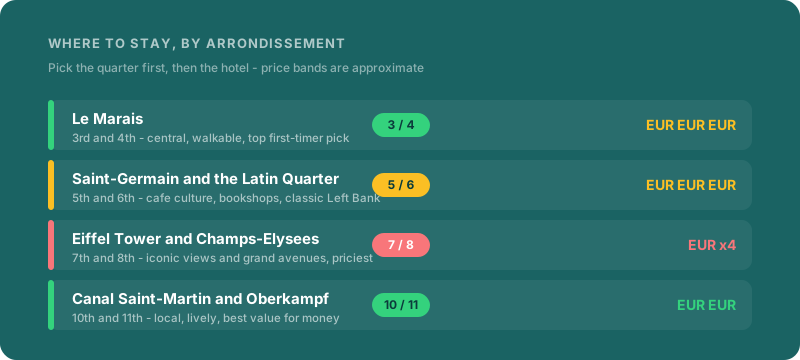
- Le Marais (3rd and 4th) - best all-rounder for a first trip. Central, walkable, and packed with galleries, boutiques and cafes, with Notre-Dame, the Pompidou Centre and the Louvre all within reach on foot. Lively into the evening, which is either the appeal or the catch depending on how you sleep.
- Saint-Germain and the Latin Quarter (5th and 6th) - classic Left Bank. Bookshops, historic literary cafes, and one of the calmer, safer areas to base yourself, with easy walks to the Seine, the Luxembourg Gardens and the Latin Quarter's bistros.
- Eiffel Tower and Champs-Elysees (7th and 8th) - iconic but priciest. Grand avenues, big monuments and tower views; quieter residential streets in the 7th, more polished and expensive overall. Great for the postcard, less for budget.
- Canal Saint-Martin and Oberkampf (10th and 11th) - local and best value. Where Paris actually hangs out: canal-side picnics, natural-wine bars, and noticeably better room rates a short Metro ride from the center.
One hotel, not three. Even on a week-long trip, base yourself in one quarter and day-trip out. Dragging a suitcase between hotels mid-trip burns time and money you'd rather spend on dinner. To squeeze the most days out of the fewest vacation days around French public holidays, see France's "le pont" bridge days, and run your own dates through the leave optimizer.
A quick comparison
Price bands below are approximate and swing hard by season and how far ahead you book - treat them as relative, not absolute.
| Quarter (arr.) | Best for | Vibe | Approx. nightly band |
|---|---|---|---|
| Le Marais (3 / 4) | First-timers, walkers | Central, buzzy, historic | EUR EUR EUR |
| Saint-Germain & Latin Quarter (5 / 6) | Classic Paris, cafe sitting | Elegant, calmer, Left Bank | EUR EUR EUR |
| Eiffel & Champs-Elysees (7 / 8) | Iconic views, grand avenues | Polished, quiet-ish, costly | EUR EUR EUR EUR |
| Canal Saint-Martin & Oberkampf (10 / 11) | Local life, value, nightlife | Young, lively, relaxed | EUR EUR |
| Montmartre (18) | Village feel, views | Hilly, romantic, touristy by day | EUR EUR – EUR EUR EUR |
Where to eat - a map by quarter
Paris dining tip number one: remember the street or quarter, not the single restaurant. Individual spots open, close, and swing in and out of fashion, but the food character of a quarter stays remarkably stable.
| Crave | Head to | Why |
|---|---|---|
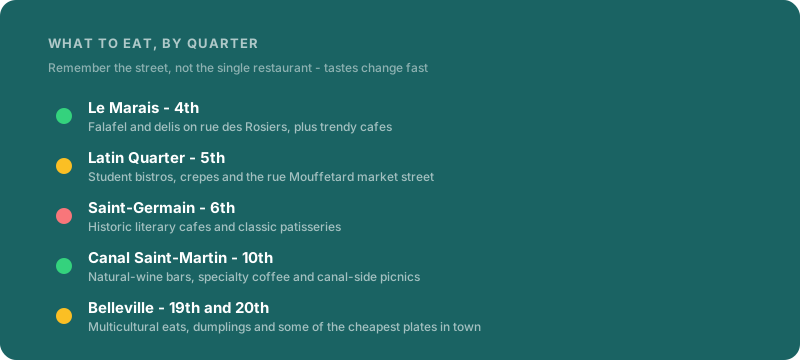
| Falafel, delis, casual lunch | Le Marais (4th), rue des Rosiers | Historic Jewish quarter; falafel windows and trendy cafes side by side |
| Cheap bistros, crepes, markets | Latin Quarter (5th), rue Mouffetard | Student turf for centuries; a market street and budget plates |
| Cafe-sitting, patisserie | Saint-Germain (6th) | Famous literary cafes and classic pastry counters |
| Natural wine, coffee, picnics | Canal Saint-Martin (10th) | Wine bars and roasters; grab a baguette and sit by the water |
| Multicultural, cheapest plates | Belleville (19th / 20th) | A melting-pot quarter with some of the best-value eating in the city |
A few habits travel well anywhere in Paris: lunch formules (set menus) are far cheaper than the same food at dinner; a coffee standing at the bar costs less than the same coffee at a table; and bakeries make a near-free breakfast. Hours shift with the season and many kitchens close between lunch and dinner, so check the day's hours in your maps app before you walk over.
Day trips: Versailles and Giverny
Two of the best half-day-to-full-day escapes sit close enough to do without a car. Both reward an early start and advance tickets.
Versailles - the palace and gardens
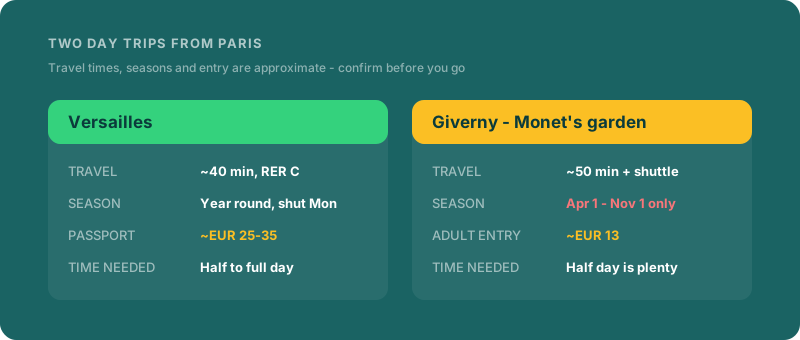
The Château de Versailles is roughly 40 minutes out on the RER C to Versailles Château Rive Gauche, then a short walk. A few things worth knowing, all approximate and subject to change:
- Timed entry is mandatory. Even free-admission visitors (under 18, or under 26 and resident in the EU) must book a time slot online.
- Tickets (approx.): the all-in Passport runs about EUR 25 in low season and EUR 35 in high season (EEA-reduced about EUR 22 / EUR 32); a Palace-only ticket is around EUR 21.
- Seasonal pricing. Since early 2026 Versailles charges by season: high season is roughly April 1 - October 31, low season November 1 - March 31. The big difference is the gardens, which are free in low season but carry an admission charge in high season on Musical Fountains/Gardens days.
- Hours and closures. The Palace opens around 9:00; it's closed Mondays and on Jan 1, May 1 and Dec 25. Plan 2-3 hours for the Palace alone, or 5-6 hours for the full estate including the Trianon.
Giverny - Monet's house and garden
Giverny is a seasonal trip and the timing trips people up. The Fondation Claude Monet is open only April 1 to November 1, 2026, from 10:00 to 18:00 (last admission 17:30), then closed for winter. Adult entry is about EUR 13 (children 7-17 about EUR 7, under 7 free); online booking is strongly recommended because on-site queues get long in the mid-May to late-September peak.
Getting there: a train from Paris Saint-Lazare to Vernon-Giverny takes roughly 50 minutes, with departures clustered in the morning and then every couple of hours - check the timetable, because miss one and you wait. From Vernon, a shuttle bus (about EUR 10 round trip) runs to the gardens, or you can walk it in around 30-40 minutes. A half day on site is plenty.
A sample week: budget table
Below is an illustrative mid-range budget for one person on a 6-night Paris trip, staying in a value-leaning quarter (think 10th/11th), eating well but not extravagantly, and doing both day trips. Figures are approximate, exclude flights, and move with exchange rates and how far ahead you book.
| Item | Approx. (1 person) | Notes |
|---|---|---|
| Lodging (6 nights) | EUR 600 - 1,100 | Value quarter, mid-range hotel/apartment |
| Food (6 days) | EUR 240 - 420 | Lunch formules + bakeries keep this down |
| City transport (Metro/RER) | EUR 30 - 50 | Multi-day pass or carnet of tickets |
| Versailles day trip | EUR 35 - 55 | RER fare + Passport ticket |
| Giverny day trip | EUR 45 - 65 | Train + shuttle + EUR 13 entry |
| Museums & sights | EUR 60 - 120 | Louvre, Orsay, etc. - book timed slots |
| Total (approx., excl. flights) | EUR 1,010 - 1,810 | Shoulder season, value choices |
Time your trip into shoulder season and the lodging line drops noticeably; see Europe shoulder season: where and when. And before you fly home, the VAT refund can claw back part of larger purchases.
FAQ
Which arrondissement is best for a first trip to Paris?
For most first-timers, Le Marais (3rd/4th) is the easiest all-rounder: central, walkable to the major sights, and full of cafes and shops. If you want something calmer, Saint-Germain or the Latin Quarter (5th/6th) is the classic Left Bank choice. For better value with a quick Metro hop to the center, look at the 10th or 11th around Canal Saint-Martin and Oberkampf.
Is Versailles or Giverny the better day trip?
Different trips. Versailles is grand, year-round (except Mondays), and about 40 minutes out - go for palace-and-gardens spectacle. Giverny is intimate and seasonal (roughly April 1 to November 1 only), about 50 minutes plus a shuttle - go for Monet's garden and lily pond. If you can only pick one and you're traveling in winter, Versailles is the answer because Giverny is closed.
Do I need to book Versailles tickets in advance?
Yes - timed entry is mandatory, and even free-admission visitors must reserve a slot online. Book ahead, aim for an earlier slot to beat crowds, and double-check the season (high vs low) because it changes both the price and whether garden access is free. Confirm everything on the official Versailles site before you travel.
Roughly how much does a week in Paris cost?
As an illustrative mid-range estimate, a 6-night trip with value-quarter lodging, good-but-not-lavish food, city transport, and both day trips lands around EUR 1,000-1,800 per person excluding flights. Shoulder-season timing and lunch set menus pull it toward the low end; peak summer and central luxury hotels push well past the high end.
Sources
- Château de Versailles - Tickets and prices (official) - ticket types, prices, hours, mandatory timed entry
- Château de Versailles - 2026 ticketing (official) - seasonal pricing and high/low season dates
- Fondation Claude Monet, Giverny - Useful information (official) - 2026 opening dates, hours and entry prices
- Time Out Paris - Where to stay in Paris - neighborhood character and recommendations
- Paris Discovery Guide - Where to stay in Paris - arrondissement-by-arrondissement lodging guide
- Paris Unlocked - Full guide to the Paris arrondissements - how the 20 districts are organized
Prices, opening hours, season dates and entry rules change often and were last checked on 2026-06-30. Reconfirm the current figures on the official sites above before booking or traveling.
Next Step
Match this trip idea to your PTO
See which holiday windows make this trip easiest to book, then set reminders before prices move.
Plan this trip windowGet booking-timing and PTO planning emails
Related topics
Useful tools
Related Articles
New Mexico Travel Guide: Chile, Dunes, and Big Skies
New Mexico rewards drivers with white gypsum dunes, mile-high adobe cities, and green-chile everything, but the distances, altitude, and afternoon storms catch most first-timers off guard.
New York Travel Guide: Beyond the City, Into the State
New York is two trips in one: a dense five-borough metropolis and a huge upstate wilderness of gorges, six-million-acre forests, and lake-effect snow belts that most visitors never reach.
Iceland in November: The Off-Peak Window Before the Christmas-Market Surge
November is the last quiet window before Iceland's Christmas-market prices kick in. Here is exactly how it pencils out -- flights, hotels, Blue Lagoon, Ring Road access -- and how US holidays bridge into it.